📡 Emergency Amateur Radio Station for a Blackout: Complete Guide for HB9
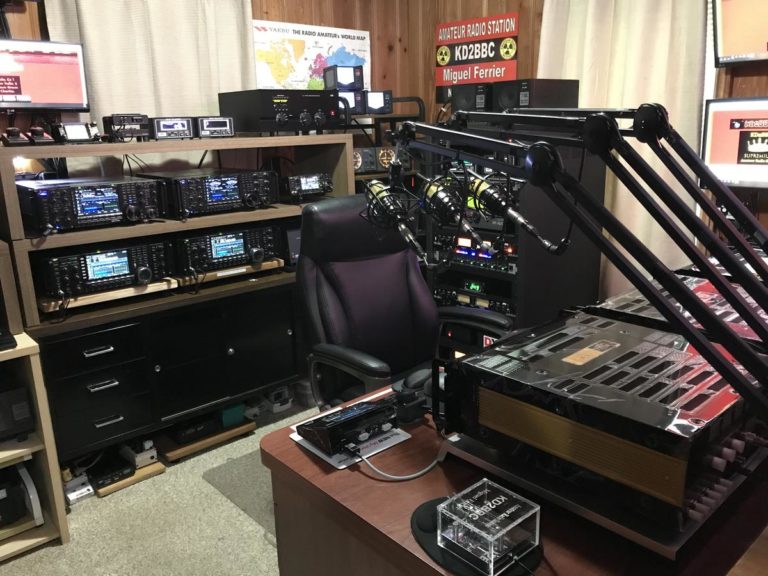
When the power grid goes down and all modern communications fall silent, radio amateurs become the last working network. This guide explains how to build a complete emergency station: portable HF/VHF/UHF transceivers, rapid-deployment antennas, a Go-Box, LiFePO4 batteries, solar panels, digital modes (Winlink, APRS, JS8Call) and the USKA Notfunk network. Everything a Swiss radio amateur needs to know to be operational when everything else has stopped working.
📡 1. Why radio amateurs are essential during a blackout
During a prolonged blackout, modern communication systems (mobile phones, Internet, e-banking) fail within a few hours. The authorities' Polycom network lasts longer thanks to its generators, but it is reserved for the official services (police, fire brigade, ambulances). Licensed HB9/HB3 radio amateurs fill a critical gap between official communications and the public.
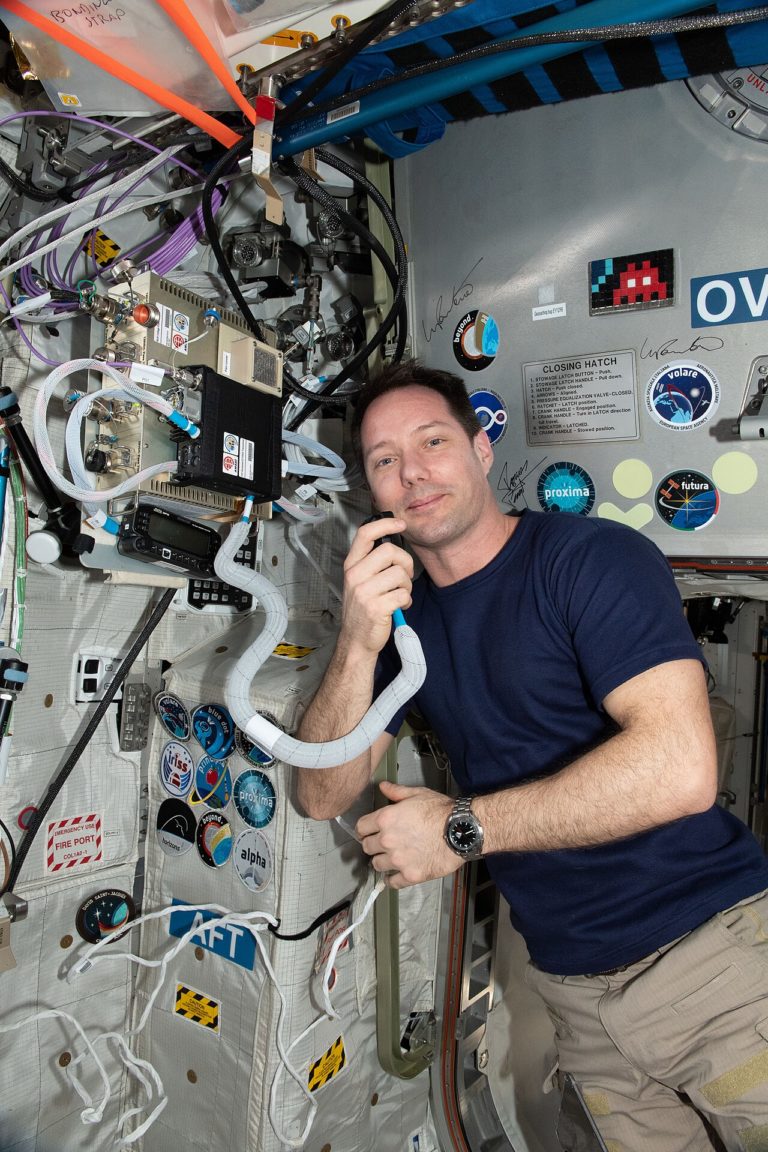
On HF (shortwave), a radio amateur can communicate across the whole world without any satellite or infrastructure
Winlink lets you send and receive email by radio when the Internet is completely down
A portable station runs on battery + solar, with no dependence on the power grid
📊 The USKA network in figures:
- ~4,000 licensed radio amateurs in Switzerland
- 85 VHF/UHF repeaters on 145, 435 and 1250 MHz with independent power
- 3 Winlink RMS stations (HB9AK-1, HB9AK-4, HB9AK-14) for email by radio
- Formal agreements with the cantons (Fribourg, Zurich, Zug, Basel-Landschaft, Aargau) and the Swiss Red Cross
- Swiss Emergency Contest (SEC), an annual emergency communications exercise
📻 2. Emergency transceivers: which radio to choose?
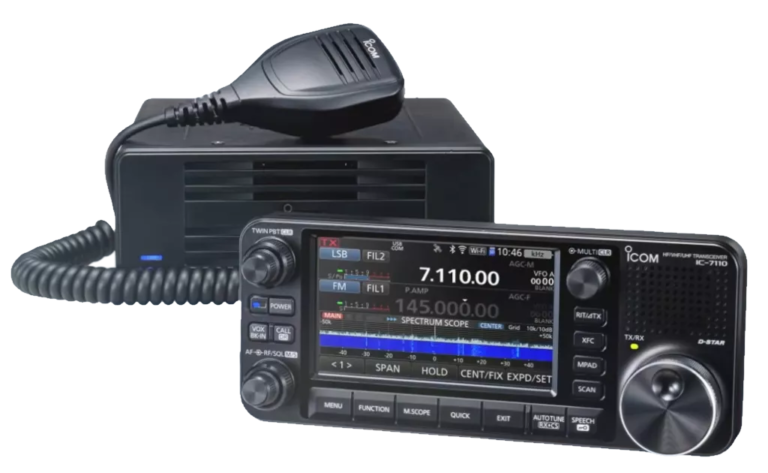
The choice of transceiver depends on your emergency scenario. For local communication (town, valley), a VHF/UHF handheld is enough. For regional or national communication (between cantons), an HF radio is essential. Ideally, have both.
Portable HF transceivers: long-distance communication
🏆 Yaesu FTX-1 FIELD: the revolutionary successor
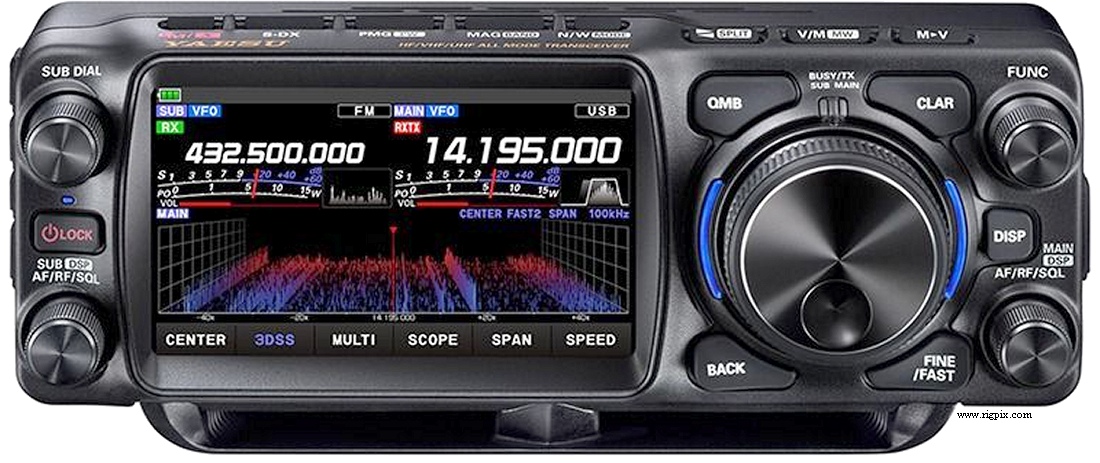
The FTX-1 FIELD is Yaesu's brand-new portable transceiver (2025), successor to the legendary FT-818. Covering HF + 50 MHz + 144 MHz + 430 MHz all-mode with C4FM, it features a 4.3" colour touchscreen with 3DSS technology (3D spectrum scope), an SDR architecture, simultaneous dual-band reception and two BNC connectors (HF/50 and VHF/UHF). Its 6400 mAh SBR-52L battery gives up to 9 hours of operation on HF SSB. 6W on the internal battery, 10W on external power: the ideal companion for emergencies and field operation.
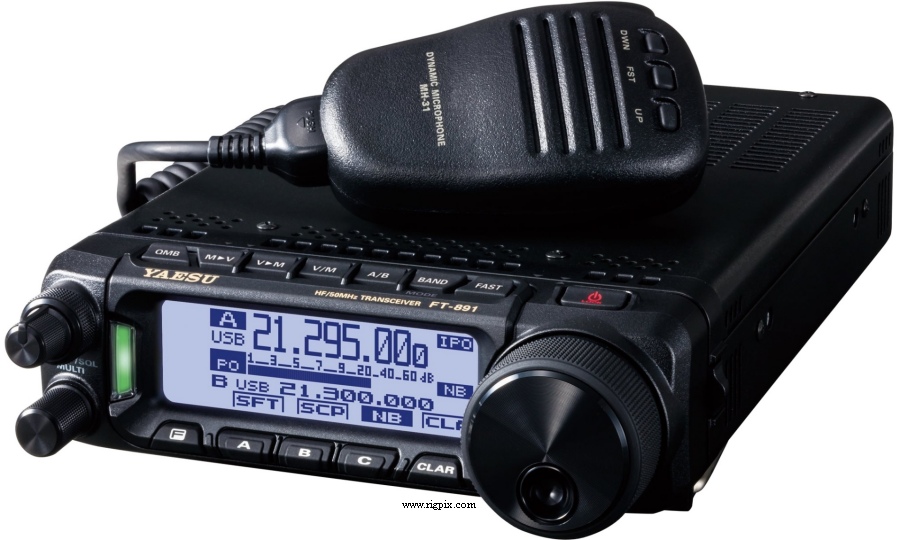
⚡ Yaesu FT-891: the compact 100W rig
For those who need power in an emergency, the FT-891 delivers 100W on HF/6m in an incredibly compact case (1.9 kg). 32-bit DSP, triple conversion, 3 kHz roofing filter. USB connectivity for digital modes. It is the best choice for an HF emergency station able to get through when conditions are poor.
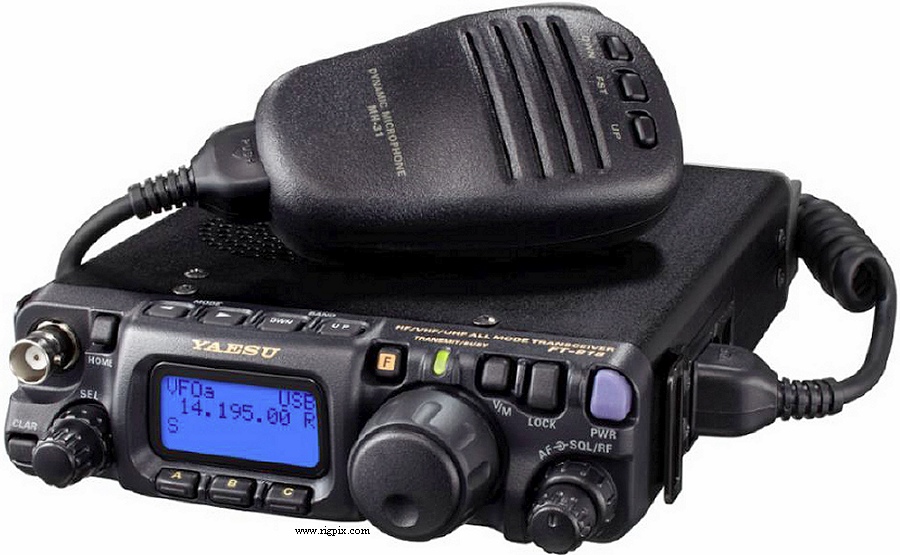
🎒 Yaesu FT-818ND: the legendary QRP rig
Successor to the iconic FT-817, the FT-818ND covers HF/VHF/UHF all-mode with 6W max. Its high-stability TCXO (±0.5 ppm) makes it reliable on digital modes. Built-in NiMH battery, 208 memories. The perfect lightweight for SOTA and the grab bag, a timeless classic among portable operators.
HF base station: the main rig
📻 Yaesu FT-991A
All-in-one HF/6m/2m/70cm station with C4FM System Fusion, 3.5" touchscreen, spectrum scope, 100W HF, 50W VHF/UHF. The ultimate all-round emergency station: one radio for every band and every mode.
~CHF 1,300-1,500
📻 Yaesu FT-DX10
HF/50MHz SDR transceiver with direct-sampling receiver, large 5" colour touchscreen, real-time spectrum scope, 300 Hz/500 Hz/3 kHz roofing filters, narrow roofing filters. 100W, an exceptional receiver with remarkable selectivity. Yaesu's best choice for a high-performance HF emergency base station.
~CHF 1,400-1,600
VHF/UHF handhelds: local communication
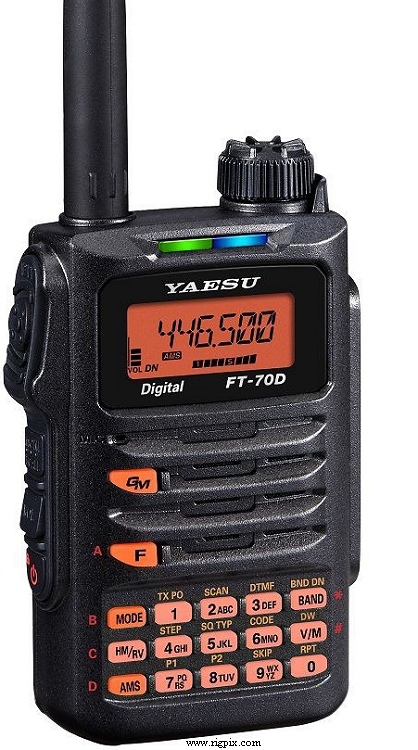
📱 Yaesu FT-70DR: affordable C4FM
Dual-band C4FM System Fusion + analogue FM handheld. The FT-70DR is the ideal entry point into Yaesu digital: compatible with all C4FM/Wires-X repeaters while keeping FM compatibility for analogue repeaters. Rugged IPX5 construction (water-jet resistant), 1800 mAh Li-ion battery giving about 9 hours of operation. Simple, reliable and affordable.
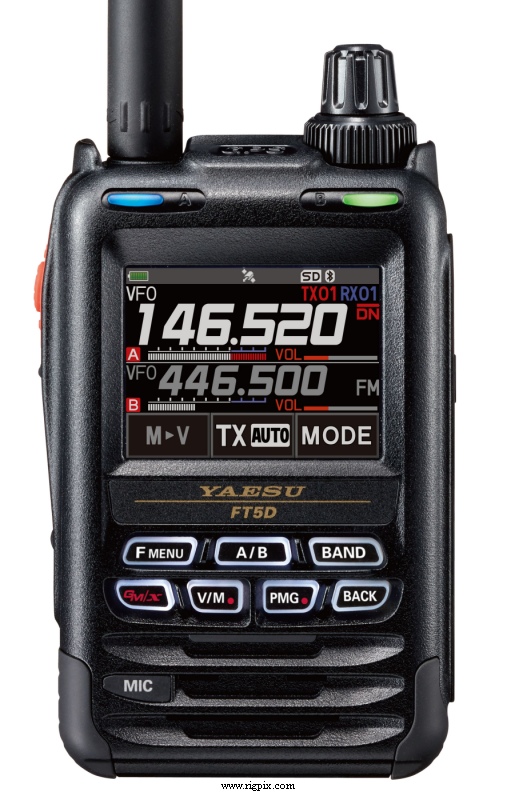
📱 Yaesu FT-5DR: the advanced C4FM handheld
Top-of-the-range dual-band handheld with C4FM System Fusion, built-in GPS, APRS, 1.7" colour touchscreen, Bluetooth and simultaneous V+V/U+U/V+U reception. The FT-5DR offers GM (Group Monitor) mode, which shows the position of every member of your group on the screen, ideal for emergency coordination. Wires-X compatible for Internet connectivity via digital repeaters.
📱 Yaesu FT-65R: the rugged budget option
VHF/UHF handheld ruggedised to IP54 and MIL-STD-810 standards. 5W, 1950 mAh Li-ion battery (9+ hours of operation). Commercial-grade construction, 3.5h fast charger. The sensible choice for a reliable, affordable emergency handheld.
Transceiver comparison table
| Model | Bands | Power | Weight | Main strength | Price ~CHF |
|---|---|---|---|---|---|
| Yaesu FTX-1 FIELD | HF/VHF/UHF | 10W | ~1.1 kg | All-band SDR, C4FM, touchscreen | 1,300-1,400 |
| Yaesu FT-891 | HF/6m | 100W | 1.9 kg | Compact 100W | 750-850 |
| Yaesu FT-818ND | HF/VHF/UHF | 6W | ~1 kg | Legendary QRP | 700-800 |
| Yaesu FT-991A | HF/VHF/UHF | 100W | 4.3 kg | All-in-one, all bands | 1,300-1,500 |
| Yaesu FT-DX10 | HF/6m | 100W | ~9 kg | High-performance HF SDR base | 1,400-1,600 |
| Yaesu FT-70DR | VHF/UHF | 5W | ~300g | C4FM + FM, IPX5 | 200-250 |
| Yaesu FT-5DR | VHF/UHF | 5W | ~300g | Advanced C4FM + GPS/APRS | 450-550 |
| Yaesu FT-65R | VHF/UHF | 5W | ~250g | Rugged, IP54, price | 80-120 |
📡 3. Portable emergency antennas: rapid deployment
In an emergency, you don't have time to put up a tower and a Yagi beam. You need light, compact antennas that deploy quickly. Here are the best options for each situation.
Portable HF antennas
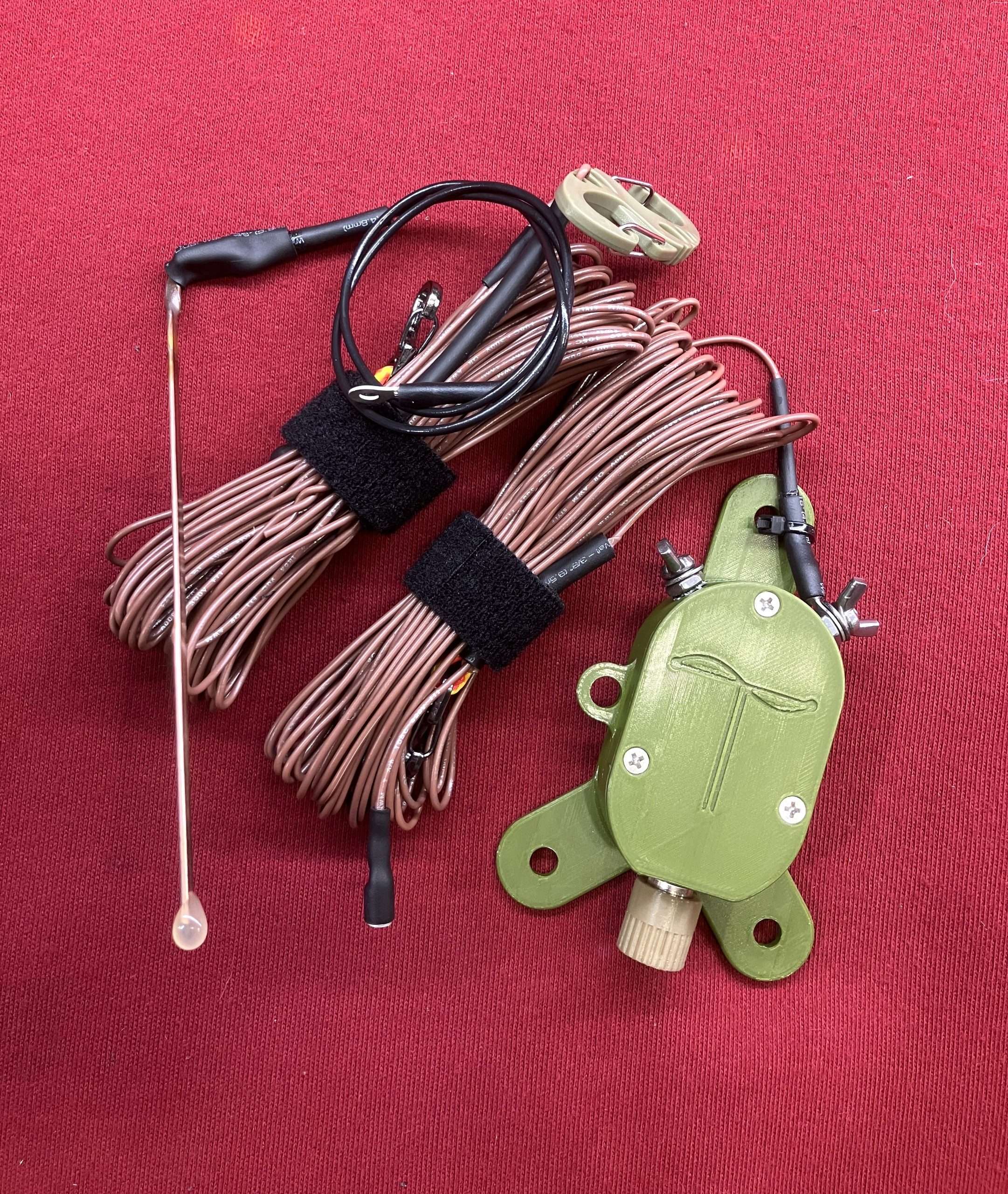
🏆 End-Fed Half-Wave (EFHW) antenna: the queen of portable operation
The EFHW is the most popular portable HF antenna in the world. A simple antenna wire fed at one end through a 49:1 transformer (2500Ω → 50Ω). Multi-band (typically 80m-10m), it needs only one high support point. Deployed in 5-10 minutes: hang one end up high (tree, mast, balcony), and the other on the ground or as an inverted-L.
🔄 Linked dipole: the reliable one
A classic wire dipole with removable links (Anderson Powerpole or crocodile clips) that let you change band by adding or removing wire sections. Predictable performance, balanced feed, no tuner needed if it is cut correctly. Needs two support points.
🔁 Chameleon F-LOOP 3.0: the indoor antenna
Portable magnetic loop covering 80m-10m (3.5-29.7 MHz). It can work indoors, on a balcony or in a confined space, a unique advantage. Performance only 1-2 S-units below a quarter-wave vertical. No ground plane needed. Ideal for flats or when an outdoor installation is impossible.
Portable telescopic masts
A portable fibreglass mast lets you raise your wire antenna to a height of 10-12 metres, which greatly improves range, especially on VHF/UHF and for HF verticals.
| Model | Height | Collapsed | Weight | Features | Price ~CHF |
|---|---|---|---|---|---|
| Spiderbeam HD 12m | 12 m | 118 cm | 3.2 kg | Heavy-duty, one-person setup, fibreglass | 120-160 |
| Spiderbeam Mini 10m | 10 m | 72 cm | 1.7 kg | Suitcase-sized, ultra-light, SOTA/POTA | 80-110 |
| SOTAbeams Tactical Mini | 6 m | 56 cm | ~500g | 11 sections, fits in a rucksack, quick to deploy | 50-70 |
VHF/UHF antennas: base and portable
💡 Instant upgrade: replacing the stock antenna on your handheld with a Diamond SRH-771 or a Nagoya NA-771 can improve range by 30 to 50%. It is the simplest and cheapest upgrade for a VHF/UHF handheld. For maximum performance, mount a base antenna such as the Diamond X-50N up high.
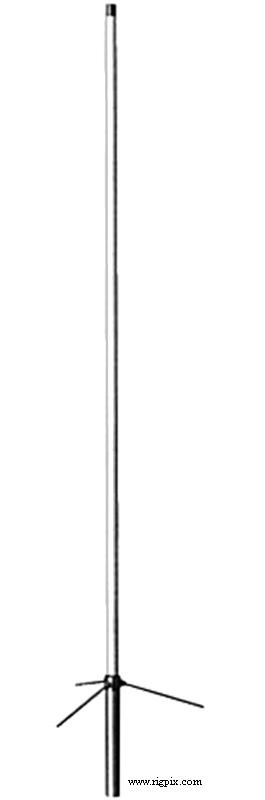
📡 Diamond X-50N: the VHF/UHF base antenna
The benchmark dual-band 144/430 MHz base antenna. The X-50N is the most popular fixed antenna among radio amateurs worldwide. Gain of 4.5 dBi (VHF) / 7.2 dBi (UHF), length 1.7m, max power 200W. Simple to mount on a mast or balcony. Ideal as a permanent antenna for your emergency station, it works just as well for FM repeaters as for C4FM digital modes.
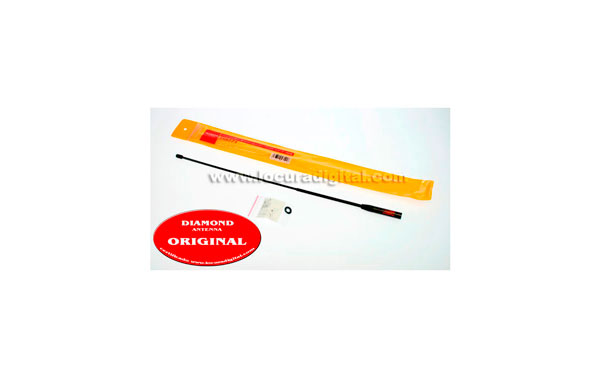
📱 Diamond SRH-771: the benchmark handheld antenna
Flexible dual-band 144/430 MHz antenna with SMA connector. Length 39 cm, gain 2.15 dBi (VHF) / 3.8 dBi (UHF). The classic replacement for the stock antenna, giving an immediate 30-50% improvement in range on your FT-70DR, FT-5DR or FT-65R. Flexible and tough, it withstands knocks and bending without breaking.
📦 4. The Go-Box: your grab-and-go emergency station
The Go-Box concept is simple: a complete amateur radio station packed in a rugged case, ready to be grabbed in seconds and set up in minutes. Everything is pre-wired, the connectors are standardised and the battery is charged.
Components of a Go-Box
- The case: Pelican 1450/1500 (waterproof, unbreakable) or a budget alternative such as Apache (Harbor Freight). Pre-cut foam to hold each item in place.
- The transceiver: your HF or VHF/UHF radio fixed in the case. The FTX-1 FIELD, FT-891 or FT-818ND are perfect choices thanks to their compact size.
- The LiFePO4 battery: 12V, 20-50Ah depending on your needs. Standardised Anderson Powerpole connectors. Secured at the bottom of the case.
- The distribution panel: fused 12V distribution with Anderson Powerpole connectors to power the transceiver, lighting, USB charging and so on.
- The antennas: coiled EFHW, coaxial cable, telescopic mast strapped to the outside or in a separate bag.
- The accessories: microphone/headset, USB cable for digital modes, SWR meter, paper logbook, pen, head torch, printed emergency frequencies.
⚡ The Anderson Powerpole standard: radio amateurs all over the world use Anderson Powerpole 30A connectors as the standard for 12V connections. Genderless (no male/female), standardised polarity (red = positive), secure connection. Wire your whole station with Powerpoles to guarantee interoperability with other emergency stations.
Example of an HF Go-Box configuration
╔══════════════════════════════════════════════════════╗
║  GO-BOX HF, portable emergency station               ║
╠══════════════════════════════════════════════════════╣
║                                                      ║
║  Transceiver:     Yaesu FT-891 (100W HF)             ║
║  Battery:         LiFePO4 20Ah (240Wh)               ║
║  Antenna:         EFHW 80m-10m + 10m mast            ║
║  Tuner:           Internal or MFJ-939                ║
║  Digital:         USB cable + PC, Winlink/JS8Call    ║
║  Case:            Pelican 1500                       ║
║                                                      ║
║  Estimated run time (SSB, 20% duty cycle):           ║
║  → 100W: ~8 hours                                    ║
║  → 50W:  ~14 hours                                   ║
║  → 20W:  ~30 hours                                   ║
║                                                      ║
║  Total weight:    ~8 kg (without mast)               ║
║  Deployment time: ~15 minutes                        ║
╚══════════════════════════════════════════════════════╝
🔋 5. Independent power: LiFePO4 batteries and solar
In an emergency, the power source is as critical as the transceiver. LiFePO4 (lithium iron phosphate) batteries have revolutionised portable amateur radio: light and safe, with a nominal voltage of 12.8V (about 13.2V at rest) that is perfectly suited to 12V transceivers.
Why LiFePO4?
⚖️ Light weight
Less than half the weight of an equivalent lead-acid battery. A 20Ah LiFePO4 weighs ~2.5 kg compared with ~6 kg for lead-acid.
🔄 Longevity
2000-5000 cycles at 80% depth of discharge, compared with 300-500 cycles for lead-acid. Lasts 10+ years.
⚡ Stable voltage
13.2-13.4V at rest (12.8V nominal), perfect for 13.8V transceivers. The voltage stays stable down to 80% discharge.
🔒 Safety
No gassing, no risk of explosion, safe to use indoors. Built-in BMS.
HF transceiver power consumption
| Scenario | Current | Power | Run time 20Ah | Run time 50Ah |
|---|---|---|---|---|
| Receive only | 1.5-2.5A | 20-33W | 8-13 hours | 20-33 hours |
| TX 100W SSB (20% duty) | ~5-6A avg. | ~70W avg. | ~3-4 hours | ~8-10 hours |
| TX 100W FM continuous | ~23A | ~300W | ~50 minutes | ~2 hours |
| QRP 5-10W SSB | ~2-3A avg. | ~30W avg. | ~7-10 hours | ~17-25 hours |
| Winlink VARA HF | ~4-5A avg. | ~55W avg. | ~4-5 hours | ~10-12 hours |
Solar sizing for an HF station
☀️ Rule of thumb:
- 100W HF station: 200-300W solar panel + 50Ah battery minimum
- QRP station (5-20W): 50-100W solar panel + 12-20Ah battery
- VHF/UHF handheld: a 20-50W solar panel or a USB charger is enough
Use an MPPT charge controller (90-98% efficiency) rather than PWM (70-80%). Watch out for radio frequency interference (RFI): test your solar setup on receive before relying on it.
⚠️ RFI (Radio Frequency Interference): DC-DC converters, solar chargers and the inverters in portable power stations (EcoFlow, Jackery, etc.) can generate radio noise on the HF bands. Always test your complete setup on receive before counting on it in an emergency. Dedicated LiFePO4 batteries (without an inverter) connected directly at 12V DC are the cleanest for radio.
💻 6. Emergency digital modes: communicating beyond voice
Digital modes turn your radio station into a sophisticated communication tool: email, text messaging, GPS position reporting, all without the Internet. In an emergency, they offer capabilities that voice alone cannot.
Winlink: email by radio
📧 Winlink: the worldwide email network by radio
Winlink is a worldwide email messaging system using amateur radio frequencies. When the Internet is down, you can send and receive email through your HF or VHF station. Messages pass through radio gateways (RMS) connected to the Winlink 2000 servers.
How it works:
- Install Winlink Express on a Windows computer (or Pat for Linux/Mac).
- Connect your transceiver to the PC via an audio interface (SignaLink, Digirig, or built-in USB cable).
- Choose a protocol: VARA HF (fast and reliable), ARDOP (free), or VARA FM for VHF.
- Connect to an RMS: in Switzerland, use HB9AK-1 (Hörnli, 1130m), HB9AK-4 (Bullet, 1140m) or HB9AK-14 (Titlis, 3000m).
- Write and send your email: it will be routed to the recipient through the Winlink network.
🇨🇭 Winlink RMS stations in Switzerland:
- HB9AK-1, Hörnli (1130m, east of Zurich), 2m packet on 144.925 MHz at 1200 Bd + 10m HF
- HB9AK-4, Bullet (1140m, French-speaking Switzerland), VARA FM (wide/narrow) + packet on 144.900 MHz
- HB9AK-14, Mount Titlis (3000m, central Switzerland), UHF VARA FM + packet + 10m HF
These mountain-top stations provide excellent coverage of Switzerland and neighbouring countries.
JS8Call: weak-signal text messaging
⌨️ What is JS8Call?
A digital mode derived from FT8, designed for keyboard-to-keyboard messaging in weak-signal conditions. Unlike FT8 (structured exchanges), JS8Call allows free-text conversations. It works with extremely weak signals, ideal for QRP.
🆘 Why use it in an emergency?
JS8Call offers store-and-forward relaying: if the station you are calling is not on the air, your message is stored and relayed automatically by intermediate stations. Automatic GPS position reporting. It works even with 1-2W!
APRS: automatic position reporting and messaging
📍 APRS (Automatic Packet Reporting System):
- European frequency: 144.800 MHz
- Automatic GPS beacon: your position is transmitted at regular intervals
- A network of digipeaters extends coverage to the whole of Switzerland
- Short text messages (like SMS)
- Real-time mapping on aprs.fi
- Email gateway via Winlink APRS
In an emergency: APRS lets you automatically locate operators in the field, track their movements and send short messages, even when the mobile network is down.
Equipment needed for digital modes
| Item | Options | Price ~CHF | Notes |
|---|---|---|---|
| Audio interface | Digirig Mobile, SignaLink USB, or built-in USB cable (FTX-1 FIELD, FT-DX10) | 50-150 | The Digirig is compact and perfect for the Go-Box |
| Computer | Windows laptop/tablet, or Raspberry Pi | Variable | An old dedicated laptop will do. Keep it charged. |
| Software | Winlink Express, JS8Call, WSJT-X, Fldigi | Free | Install and test it BEFORE the emergency! |
| Cables | USB-A/USB-C, audio cables if needed | 10-30 | Take spare cables |
🇨🇭 7. USKA Notfunk: the Swiss amateur radio emergency network
Notfunk (emergency radio) is coordinated by the USKA under the leadership of Jean-Michel Clerc HB9DBB (emergency@uska.ch). Since HB9KF was founded in 1995 and IG-Notfunk in 2006, Switzerland has built up a structured amateur radio emergency network with formal cantonal agreements.
Cantonal organisation
| Canton | Section | Key features |
|---|---|---|
| Fribourg | HB9FG (RAF-ORCAF) | Agreement with the OCC since 2018. 17 members, 4 portable go-cubes + 2 vehicle-based units. FM voice + Winlink-VARA. |
| Zurich | HB9NF (Notfunk Zürich) | Notfunk station at Brütten (2023), solar + battery power (autonomy of several weeks). 24-hour monitoring of emergency frequencies. |
| Zug | HB9ZG | 23 radio amateurs, regular message-handling training. |
| Basel-Landschaft | HB9NFB (Notfunk Birs) | DAB+ ASA (Automatic Safety Alert) tests. Support for cantonal crisis operations. |
| Aargau | HB9NA | Established since 1 August 2014. Cooperation with the cantonal authorities. |
| Uri/Schwyz | HB9CF | Voice traffic, data relaying, deployment of mobile relay stations. |
AREDN: the high-speed mesh network
🌐 AREDN (Amateur Radio Emergency Data Network) is a high-speed TCP/IP mesh network on the amateur bands (mainly 5.8 GHz). It uses modified commercial WiFi hardware (Ubiquiti, MikroTik) with open-source firmware. AREDN is deployed in Switzerland: the first Swiss AREDN Convention took place in December 2022 (organised by HB9FTS).
Capabilities: VoIP (telephone without a network), file sharing, email, video, web applications, all without the Internet, over high-speed radio links between nodes. Throughput up to 54 Mbps.
How to take part in Notfunk
- Get your licence: CEPT (HB9) or NOVICE (HB3) from OFCOM. The USKA offers training courses: uska.ch/ausbildungskurse
- Join your local USKA section and the cantonal Notfunk group (HB9NF, HB9FG, HB9ZG, etc.). In French-speaking Switzerland, contact HB9V or HB9FG.
- Take part in the Swiss Emergency Contest (SEC), an annual exercise in September. 80m, 40m, 2m and 70cm bands in SSB and FM.
- Prepare your station: a Go-Box with independent power, portable antennas, digital modes (Winlink at the very least).
- Practise regularly: join local nets, test your Winlink connections, check your batteries and antennas.
📡 8. Amateur radio emergency frequencies in Switzerland
HF frequencies: national and international communication
| Frequency | Band | Use | Range |
|---|---|---|---|
| 3.760 MHz | 80m | IARU R1 emergency centre of activity | Regional (~500 km), night |
| 7.110 MHz | 40m | IARU R1 emergency centre of activity | National/international, day and night |
| 14.300 MHz | 20m | IARU R1 emergency centre of activity | International, day |
| 18.160 MHz | 17m | IARU R1 emergency centre of activity | International, day |
| 21.360 MHz | 15m | IARU R1 emergency centre of activity | International, day (good conditions) |
| 3.643 MHz | 80m | CH/AT/DE emergency (CW) | Regional |
| 7.085 MHz | 40m | CH/AT emergency | National |
| 1.873 MHz | 160m | CH/AT emergency | Regional, night (short distance) |
💡 ±20 kHz: emergency traffic may be found up to ±20 kHz either side of the centre frequencies to avoid QRM. Scan the area around these frequencies.
VHF/UHF frequencies: local and regional communication
| Frequency | Band | Mode | Use |
|---|---|---|---|
| 145.500 MHz | 2m | FM | VHF calling frequency, the first thing to try in an emergency |
| 145.525 MHz | 2m | FM | USKA Notfunk frequency |
| 433.500 MHz | 70cm | FM | UHF calling frequency |
| 144.800 MHz | 2m | APRS | APRS position beacons and messages |
| Local repeaters | 2m/70cm | FM | 85 USKA repeaters with independent power |
Rega frequency (non-amateur, open to everyone)
| Frequency | Channel | Use | CTCSS |
|---|---|---|---|
| 161.300 MHz | Channel E | 🆘 Rega emergency, mountain distress, open to EVERYONE | 123.0 Hz |
🎯 9. Practical scenarios: what to do in a blackout
📡 Scenario 1: Local emergency (VHF/UHF)
Situation: power cut in your municipality, mobile network down.
- Switch on your VHF/UHF handheld on battery
- Listen on 145.500 MHz (calling frequency)
- Try the local repeaters with independent power
- Enable APRS (144.800 MHz) to report your position
- Coordinate with nearby radio amateurs to set up a local net
📡 Scenario 2: Regional blackout (inter-cantonal HF)
Situation: power cut affecting several cantons, duration unknown.
- Deploy your HF Go-Box with an EFHW antenna
- Night: listen and call on 3.760 MHz (80m)
- Day: switch to 7.110 MHz (40m)
- Set up regular traffic schedules (every 2 hours)
- Use Winlink via HB9AK-1/4/14 for formal messages
- Relay information between the local VHF nets and the regional HF net
📡 Scenario 3: International disaster (cross-border HF)
Situation: major earthquake affecting Switzerland and neighbouring countries.
- Activate the IARU Region 1 emergency net
- Cross-border frequencies: CH↔DE: 3.643/7.110 MHz | CH↔AT: 1.873/7.085 MHz | CH↔FR/IT: 7.110/14.300 MHz
- Use the standardised IARU message format (UTC date/time, callsign, position, message)
- Red Cross traffic under the IFRC/USKA agreement
- Frequency selection by propagation: 80m at night, 40m day and night, 20m by day for long distance
Emergency message procedure
Net Control:  "This is HB9xxx, HB9 emergency net on 3.760 MHz.
              All stations with emergency traffic,
              call now."

Station:      "HB9xxx from HB9yyy, EMERGENCY traffic."

Net Control:  "HB9yyy, pass your emergency traffic.
              All other stations, radio silence."

Station:      "Break, break. Formal emergency message from [location].
              Message begins: [clear and concise content]
              Message ends. Request acknowledgement."

Net Control:  "Roger, I copy: [read-back]. Confirm."

Station:      "Affirmative. HB9yyy out."
📋 10. Checklist: a complete amateur radio emergency station
📻 Transceivers
- HF transceiver (FTX-1 FIELD, FT-891 or FT-818ND)
- Backup VHF/UHF handheld
- Spare batteries for each radio
- Chargers and power cables
- Microphone/headset and external speaker
📡 Antennas
- Multi-band EFHW (80-10m)
- RG-58 coaxial cable (10-20m) + connectors
- Telescopic fibreglass mast
- Upgraded VHF/UHF antenna (Nagoya/Diamond)
- Cord, tent pegs, Velcro strap
- SWR meter or antenna analyser
🔋 Power
- 12V LiFePO4 battery (20-50Ah)
- Portable solar panel (100-200W)
- MPPT charge controller
- Anderson Powerpole distribution
- Spare fuses
- 12V cables and adapters
💻 Digital
- Laptop with Winlink Express
- Audio interface (Digirig / SignaLink)
- USB cables (A and C)
- JS8Call, WSJT-X, Fldigi installed
- List of Winlink RMS frequencies
📄 Documentation
- Copy of OFCOM licence + photo ID
- Printed emergency frequency table
- List of local repeaters with CTCSS
- Paper logbook + pens
- ICS-213 message forms
🔧 Accessories
- LED head torch (USB rechargeable)
- Multi-tool (Leatherman / Victorinox)
- Tape, cable ties, Velcro
- High-visibility vest
- Water and food (24h)
- Personal medication
🤝 Our partners

Phonicom.ch: amateur radio specialist in Switzerland
At Phonicom you will find all the Yaesu transceivers for your emergency station (FTX-1 FIELD, FT-891, FT-818ND), portable antennas (Diamond, EFHW), LiFePO4 batteries and all the gear to assemble your Go-Box. Personal advice and fast delivery in Switzerland.
Visit phonicom.ch →