📻 CB Radio and Emergency Equipment for a Blackout: Complete Guide for Switzerland
What happens when the power grid goes down, your phone has no signal and the Internet is cut off? In this complete guide, we look at how CB radio, portable power stations such as EcoFlow and solar panels let you stay self-sufficient and connected. From Swiss emergency frequencies to a complete survival kit, here is everything you need to know to be ready for a blackout.
⚡ 1. Why prepare for a blackout in Switzerland?
Switzerland is not immune to a widespread power cut. The Federal Office for Civil Protection (FOCP/BABS) and the Federal Office for National Economic Supply (FONES) recommend that every household be able to look after itself for at least a week without outside help.
Realistic scenarios
🔴 Scenario 1: Winter energy crisis
Switzerland imports electricity in winter. A cold snap combined with production problems in neighbouring countries (French nuclear plants down for maintenance, low wind output) could lead to rolling 4-hour power cuts by region.
🔴 Scenario 2: Natural disaster
A violent storm damaging transmission lines, flooding affecting electrical substations, or an avalanche in a mountain area cutting off power to entire valleys.
🔴 Scenario 3: Cyberattack on the grid
A growing threat in 2026. Switzerland has received 264 reports of cyberattacks on critical infrastructure since mandatory reporting was introduced in April 2025. MADIoT attacks targeting photovoltaic solar installations could destabilise the grid.
What stops working during a blackout
⚠️ Immediate effects of a power cut:
- 📱 Mobile phone: Cell towers have backup generators, but the fuel runs out within a few hours
- 🌐 Internet: Home router and ISP infrastructure out of action immediately
- 💳 Payments: Cash machines, card terminals and e-banking unavailable
- ⛽ Fuel: Petrol pumps need electricity to work
- 🚆 Transport: Trains at a complete standstill, traffic lights out
- 🔥 Heating: Even gas or oil boilers need an electric pump
- 💧 Water: Pumping stations may fail in some areas
✅ What ALWAYS works: CB radio (27 MHz), PMR446 walkie-talkies and amateur radio. These systems work radio to radio, without any infrastructure. All you need is a power source for the set: a portable power station, a solar panel, or even your car battery.
📻 2. CB radio: your infrastructure-free means of communication
CB (Citizens Band) radio operates on the 27 MHz band with 40 standardised channels (CEPT standard). In Switzerland, CB radio has been licence-free since 1 January 2013: no authorisation, no exam, no fee. You buy a set, connect an antenna and start talking.
📡 Why CB is ideal during a blackout:
- No infrastructure needed: no cell tower, no satellite, no server
- Direct communication between sets on 27 MHz
- 40 channels available, including channel 9 = international emergency channel
- Range of 2 to 25 km depending on terrain and antenna
- Low power consumption, runs on a 12V battery (car, portable power station)
- Licence-free in Switzerland since 2013, anyone can use it
Swiss CB regulations
Since 1 January 2013, Switzerland has considerably liberalised the use of CB radio:
- Power: 4 watts in AM/FM, 12 watts in SSB (single sideband)
- Antenna: Any type of antenna allowed, including directional antennas
- Modulation: AM, FM, SSB and even digital modes (FT8, VARA, RTTY, CW)
- Callsign: Free choice, you pick your own callsign and can register it with the SCBO (Swiss CB Organisation)
- Equipment: Must meet the technical requirements of OFCOM (BAKOM)
The best CB sets for emergencies
Mobile/base CB sets (recommended for home)

🏆 President McKinley III: the all-rounder
The President McKinley III is a benchmark AM/FM/SSB mobile/base CB set in Europe. Colour LCD screen, automatic squelch, digital ANL/NB noise reduction. Ideal as a base station at home with an outdoor antenna.
President Lincoln II+: the top of the range
AM/FM/SSB CB station with colour TFT screen, channel scanner, digital S-meter and 6-pin microphone connector. Excellent receiver for long-distance SSB communication. Can also work on the 10m amateur band (28 MHz) with modification.
President Barry II+: the compact dual-voltage set
Compact CB set with 12/24V supply (ideal for lorries AND for portable power stations). AM/FM, 40 channels, automatic noise reduction. Its affordable price makes it an excellent choice for a dedicated emergency station.
Portable CB sets (for mobility)
President Randy III: the CB walkie-talkie
Portable CB walkie-talkie with built-in rechargeable lithium battery. 40 AM/FM channels, range up to 5 km in open terrain. Compact, light and rugged, perfect for getting around in an emergency or to complement a base station.
Albrecht AE-2990 AFS: the SSB handheld
One of the few portable CB sets offering SSB (single sideband) for extra range. AM/FM/SSB, 40 channels, scanner, S-meter. Bulkier than a regular walkie-talkie, but it delivers mobile-station performance in a portable format.
CB antennas: the key part of your station
The antenna is the most important part of your CB setup. Without a good antenna, even the best CB set will be useless. On 27 MHz, antennas are fairly large (the wavelength is about 11 metres), but there are compact models and solutions for every environment.

Fixed antennas (home base station)
For an emergency station at home, a fixed antenna mounted as high as possible (roof, chimney, mast) is essential. Height is the number one factor for range on CB.
📡 Sirio Gain-Master: the absolute benchmark
Half-wave CB antenna (no ground plane needed) with an exceptional gain of about 5 dBi. Its half-wave design means it can be mounted on a non-metallic mast (wood, PVC) without losing performance. It is the most popular CB base antenna in Europe. Length: about 6.5 metres.
📡 Sirio GPE 27 5/8: the best value for money
5/8-wave ground plane CB antenna with 3 radials. Excellent gain of about 5.5 dBi thanks to its low radiation angle. Needs a ground plane (the 3 radials supplied or a metal roof). Rugged aluminium construction, weatherproof.
📡 Sirio Tornado 27: the compact vertical
Compact vertical CB antenna only 1.9 metres long. Ideal if you cannot put up a 6-7 metre antenna. The gain is lower (~2.5 dBi) but it is as discreet as can be. Mount it on a balcony, terrace or small mast.
Mobile and temporary antennas
| Type | Model | Gain | Use | Guide price |
|---|---|---|---|---|
| Magnetic | President ML-145 | ~3 dBi | Sits on the car roof or any metal surface. Ideal in an emergency: set up in 10 seconds. | ~CHF 30-40 |
| Long magnetic | Sirio Megawatt 4000 | ~5 dBi | High-performance magnetic antenna. Sits on the vehicle roof or a metal plate. | ~CHF 50-70 |
| Drill-mount mobile | President Virginia | ~3.5 dBi | Permanent vehicle installation (drilling required). Compact and rugged. | ~CHF 25-35 |
| Portable | CB walkie-talkie whip antenna | ~0 dBi | Built into portable CB sets. Limited range but no installation needed. | Included |
Essential accessories
- RG-58 coaxial cable (50 ohms): to connect the set to the antenna. Typical length: 10-20 metres. Choose good-quality RG-58 with soldered PL-259 connectors, not crimped ones.
- PL-259 connectors: the CB/amateur radio standard. Check compatibility with your set (most use SO-239/PL-259).
- Mast or mounting bracket: telescopic aluminium mast (3-6m), wall bracket or chimney mount.
- SWR meter: essential to check that your antenna is properly tuned. A high SWR (>2:1) means lost power and a risk of damaging the set.
- Lightning arrester: protects your CB set against lightning surges. Fit it on the coaxial cable where it enters the building.
💡 Golden rule: the antenna accounts for 80% of the performance of your station. A CHF 80 CB set with a good Sirio Gain-Master mounted high up will easily outperform a CHF 300 set with a small magnetic antenna sitting on the ground. Invest in the antenna first!
📱 3. PMR446 walkie-talkies: instant local communication
PMR446 radios are the ideal complement to CB. Operating on 446 MHz (UHF), these walkie-talkies are licence-free throughout Europe, compact and easy for the whole family to use, children included.
📏 Range
500m to 3 km in town, up to 8 km in open terrain. Maximum power of 500 mW ERP with a fixed built-in antenna.
📊 Channels
16 analogue channels (extended to 32 with digital dPMR). Channels 1 and 8 are conventionally used for emergencies.
🔋 Battery life
Rechargeable batteries or AA/AAA cells depending on the model. Typical battery life of 10 to 20 hours.
✅ Simplicity
Switch on, pick a channel, press the button and talk. No technical knowledge required.
Recommended PMR446 models

Motorola T82 Extreme: the rugged one
Pair of PMR446 walkie-talkies with IPX4 rating (splash-resistant). Range up to 10 km in optimal conditions. Built-in LED torch, silent vibrate alert, rechargeable battery. The ideal choice for family use in an emergency.
Midland XT70: the adventurer
PMR446 walkie-talkies with 24 channels and 1600 CTCSS/DCS sub-channel combinations. Hands-free VOX, vibrate alert and headset/microphone socket. Rechargeable Ni-MH batteries included with charging cradle.
Baofeng BF-88E: the budget PMR446 option
The type-approved European PMR446 version of the famous Baofeng. 16 channels, 1500 mAh rechargeable lithium battery, LED torch, PC-programmable. Excellent value for equipping the whole family on a budget.
🔋 4. Portable power stations: energy independence
Portable power stations are the cornerstone of your preparation. They can power your CB and PMR radios directly, as well as your lighting, your communication devices and, for the most powerful models, your television, fridge or even a hotplate. With 230V sockets, USB ports, 12V cigarette-lighter outputs and solar panel inputs, they are the Swiss Army knife of emergency power.
EcoFlow: the market leader
To power radios and small devices

⚡ EcoFlow River 2: the ideal entry-level model
The River 2 is EcoFlow's most compact portable power station. With its LiFePO4 battery (3,000+ cycles), it easily powers a CB set for more than 20 hours, charges your phones and runs LED lighting. It recharges in just 60 minutes from the mains or in 3 hours from a 110W solar panel.
⚡ EcoFlow River 2 Max: double the capacity
With 512 Wh, the River 2 Max doubles the run time of the River 2. Ideal for powering a base CB set for several days, plus LED lamps, a fan and charging several devices at once. Still LiFePO4 for an exceptional lifespan.
⚡ EcoFlow River 2 Pro: the sweet spot
The River 2 Pro offers 768 Wh of capacity with an 800W output (1600W peak). It can power more demanding devices while remaining easy to carry. Recharges in 70 minutes from the mains. The best capacity/portability compromise in the River range.
To power a TV, household appliances and more
⚡ EcoFlow Delta 2: the family station
With 1024 Wh and an output of 1800W (2700W peak), the Delta 2 is in a different league. It can power a television, a portable fridge, a low-consumption cooking appliance and of course your whole radio station for several days. 6 x 230V sockets, USB-A and USB-C ports, and a 12V cigarette-lighter output.
⚡ EcoFlow Delta 2 Max: the powerhouse
The Delta 2 Max pushes the limits with 2048 Wh of capacity and 2400W of output. Up to 1000W of solar input, allowing fast recharging even in cloudy weather. Quiet at just 30 dB, it can run an electric hotplate, a freezer and a complete radio system at the same time.
⚡ EcoFlow Delta Pro: whole-home power
EcoFlow's flagship with 3600 Wh of LiFePO4 battery and 3600W of continuous output (4500W with X-Boost). It is almost a home generator: it can power a hotplate, a space heater, a full-size fridge, the television AND your radio station. 5 x 230V sockets, 4 USB-A, 2 USB-C (100W), 12V output. Expandable with extra batteries.
Alternatives to EcoFlow
Jackery: proven reliability
Jackery Explorer 1000 v2
1002 Wh LiFePO4 power station with 1500W output. Compact design with built-in handle, clear LED display and compatibility with SolarSaga panels. Excellent for an emergency radio station and for powering household appliances.
Jackery Explorer 600 v2
Compact 640 Wh LiFePO4 version. Perfect for powering a CB set and a few essential devices for several days. Light (about 7.5 kg) and easy to carry with its retractable handle.
Bluetti: the powerful alternative
Bluetti AC200P L
A massive 2304 Wh station with 2400W output. The Bluetti AC200P L is a serious rival to the EcoFlow Delta 2 Max. Expandable with extra batteries, it offers impressive run time for extended use during a blackout. Modular system with the B230/B300 expansion batteries.
Goal Zero: the off-grid veteran
Goal Zero Yeti 500X
Compact, reliable 505 Wh station. Goal Zero is a pioneer of portable power, known for the quality of its products. The Yeti 500X offers 230V, USB and 12V outputs in a compact format. Perfect for a portable CB set and charging devices.
Power station comparison table
| Model | Capacity | Output | Weight | Solar input | Typical use | Price ~CHF |
|---|---|---|---|---|---|---|
| EcoFlow River 2 | 256 Wh | 300W | 3.5 kg | 110W | CB radio + phones | 200-260 |
| EcoFlow River 2 Max | 512 Wh | 500W | 6.1 kg | 220W | Radio + lighting + devices | 350-450 |
| EcoFlow River 2 Pro | 768 Wh | 800W | 8 kg | 220W | Complete radio station | 500-650 |
| Jackery Explorer 600 v2 | 640 Wh | 800W | 7.5 kg | 200W | Radio + essential devices | 400-500 |
| EcoFlow Delta 2 | 1024 Wh | 1800W | 12 kg | 500W | TV + radio + light cooking | 600-900 |
| Jackery Explorer 1000 v2 | 1002 Wh | 1500W | ~12 kg | 400W | TV + radio + devices | 550-750 |
| EcoFlow Delta 2 Max | 2048 Wh | 2400W | 23 kg | 1000W | Home: TV + cooking + radio | 1,500-1,800 |
| Bluetti AC200P L | 2304 Wh | 2400W | ~27 kg | 1200W | Home: power everything | 1,400-1,800 |
| EcoFlow Delta Pro | 3600 Wh | 3600W | 45 kg | 1600W | Whole-home power | 2,500-3,500 |
💡 Our recommendation: for emergency CB radio use, the EcoFlow River 2 (256 Wh) is more than enough: a CB set draws about 5-10W on receive and 20-30W on transmit. For full family use (radio + lighting + cooking + TV), aim for at least the EcoFlow Delta 2 (1024 Wh).
⚠️ Connecting a CB radio to a portable power station: use the station's 12V cigarette-lighter output to power your CB set directly. If your station only has 230V sockets, use a regulated 230V→12V power supply. The 12V output is more efficient because it avoids double conversion (battery→230V→12V).
☀️ 5. Portable solar panels: recharging without the grid
Portable solar panels turn your power station into a self-sufficient system that can be recharged indefinitely. During a prolonged blackout, that is the difference between a few days of autonomy and unlimited autonomy. Most connect directly to power stations via an MC4 cable or a proprietary connector: just unfold the panel in the sun.
EcoFlow solar panels

| Model | Power | Efficiency | Weight | Features | Price ~CHF |
|---|---|---|---|---|---|
| EcoFlow 110W | 110W | 23% | 6 kg | IP68, foldable, built-in kickstands | 250-300 |
| EcoFlow 160W | 160W | 25% (TOPCon) | 7 kg | Latest-generation TOPCon cells, foldable | 300-380 |
| EcoFlow 220W Bifacial | 220W | 23%+ | 9.5 kg | Bifacial (captures reflected light), IP68 | 400-500 |
| EcoFlow 400W | 400W | 23% | 16 kg | For the Delta Pro, fast charging | 700-900 |
Jackery solar panels
| Model | Power | Efficiency | Weight | Features | Price ~CHF |
|---|---|---|---|---|---|
| SolarSaga 80W | 80W | 25% | 5 kg | Ultra-compact, built-in stand | 200-250 |
| SolarSaga 100W | 100W | 24.3% | ~4 kg | Built-in USB-A/USB-C, foldable | 250-320 |
| SolarSaga 200W | 200W | 25% (TOPCon) | ~7 kg | Bifacial, TOPCon cells, high performance | 400-500 |
☀️ A real-world example: an EcoFlow 160W panel connected to a River 2 (256 Wh) fully recharges the battery in about 3 hours of direct sunshine. That is enough to power a CB set around the clock with a daily recharge. The panel folds up like a briefcase and is easy to store.
💡 How to connect: most panels use standard MC4 connectors or proprietary connectors (XT60 for EcoFlow). Just plug the panel cable into the power station's solar input. The MPPT charge controller built into the station optimises charging automatically. No configuration needed.
🏕️ 6. Survival equipment: the complete kit
Beyond radio communication and power, a prolonged blackout calls for suitable survival equipment. Here are the essentials recommended by the Federal Office for Civil Protection (FOCP) and emergency preparedness experts.
Lighting: LED torches
Forget dangerous candles: modern LED torches offer hundreds of hours of run time with impressive brightness.
🔦 Fenix PD36R Pro: the benchmark
Rechargeable USB-C tactical torch with 2800 lumens and a 380-metre beam. 6 brightness levels, strobe mode and eco mode for extended run time. Rechargeable 21700 battery included. IP68 aluminium construction, virtually indestructible.
🔦 Olight Warrior 3S: the tactical one
Advanced tactical torch with belt clip and dual switch (tail + side). Powerful turbo mode and ultra-economical moonlight mode for dozens of hours of light. Fast proprietary magnetic charging.
🔦 Nitecore EDC27: the compact EDC torch
Compact everyday torch (Every Day Carry) with 3000 lumens in a pocket format. 230-metre beam, built-in battery rechargeable via USB-C. Its ultra-compact format makes it ideal as a backup torch always within reach.
Hand-crank and solar emergency radio
These multi-function radios are an essential survival tool. They receive DAB+ broadcasts (SSR dropped FM at the end of 2024), recharge by hand crank or solar power, and can even charge your phone in an emergency.
📻 Eton Odyssey: the most complete
Emergency radio with AM/FM/shortwave reception, built-in solar panel, dynamo crank and a 5200 mAh rechargeable battery that doubles as a power bank for your phone. Built-in LED torch and SOS alarm.
📻 Midland ER310: the best value
Rugged emergency radio with digital display, AM/FM reception, hand crank, solar panel and Cree LED torch. Can charge a phone via USB. Shock-resistant, weatherproof casing. Excellent value for money.
⚠️ Important, DAB+ in Switzerland: SRG SSR permanently switched off FM on 31 December 2024. Make sure your emergency radio can receive DAB+ to pick up official Swiss information broadcasts. AM/FM/SW radios remain useful for foreign stations and international shortwave. For the Swiss context, choose a model with DAB+.
Multi-tools
🔧 Leatherman Signal
The ultimate survival multi-tool: emergency whistle, ferro rod (fire starter), blade sharpener, hammer and 17 tools in all. Designed specifically for emergencies and outdoor adventure.
~CHF 130-170
🔧 Victorinox SwissTool Spirit X
The top-of-the-range Swiss multi-tool with 27 functions, including sturdy pliers, a wire cutter, screwdrivers and a wood saw. Legendary Swiss craftsmanship and a lifetime guarantee.
~CHF 100-140
🔧 Victorinox Huntsman
The classic Swiss Army knife with 15 functions: large and small blades, wood saw, scissors, corkscrew, tin opener and more. Compact, reliable and affordable. A must in any emergency kit.
~CHF 40-55
🔧 Leatherman Skeletool
Minimalist, ultra-light multi-tool (142g). Pliers, blade, screwdriver and bottle opener. Perfect for everyday use and emergencies where weight matters.
~CHF 80-110
Water and food
The Federal Office for National Economic Supply (FONES) recommends stockpiling the following:
💧 Water
9 litres per person minimum (3 days × 3 litres/day for drinking and cooking). Store it in clean food-grade containers and replace it regularly.
🥫 Food
Rice, pasta, tinned food, UHT milk, oil, salt, sugar, coffee/tea, muesli, chocolate, dried meat, dried fruit. Supplies for 7 days per person.
Portable water filters
💧 Sawyer Mini: the benchmark filter
Ultra-compact water filter that removes 99.99% of bacteria and protozoa. Screws onto any standard PET bottle. Filtering capacity of 380,000 litres, practically unlimited. A must in any emergency kit.
💧 LifeStraw Personal: the classic
A straw-style filter that lets you drink straight from a stream. Removes 99.99% of bacteria and parasites. Compact and light, it slips into any emergency bag. Add Aquatabs tablets to deal with viruses.
Cooking without electricity
🔥 Camping gas stove
Portable butane/propane stove: the most practical solution. A 230g cartridge gives 1-2 hours of cooking. Store 10-15 cartridges. Can be used indoors with ventilation. Brands: Campingaz, MSR, Primus.
🔥 Portable induction hob
With an EcoFlow Delta 2 or larger (1800W+), you can run a low-power portable induction hob (800-1200W). A clean and safe solution indoors.
🔥 Rocket stove
Ultra-efficient wood stove that burns small twigs. Free and unlimited fuel. Ideal outdoors for total self-sufficiency. No cartridges to store.
🔥 Esbit solid fuel
Compact, light solid fuel tablets. They burn cleanly, store indefinitely and work even when wet. Ideal as a backup in your emergency bag.
Supplementary heating (Swiss winter)
⚠️ Critical safety: any combustion heater (wood, paraffin, gas) produces carbon monoxide (CO). Fit a battery-powered CO detector in every heated room and ensure adequate ventilation. CO is odourless and deadly.
- Wood stove: the best solution if you have one installed, up to 80% efficiency, no electricity needed. Store dry wood.
- Paraffin heater: efficient portable supplementary heating (Toyotomi/Zibro type). Store dearomatised paraffin.
- Catalytic gas heater: runs on propane bottles. Ventilation is mandatory.
- Space blankets: Mylar thermal blankets (reflect 90% of body heat). Store several.
- Winter sleeping bags: rated -10°C minimum for Swiss winters. Stay together in a single room to retain heat.
First aid kit
During a prolonged blackout, the emergency services may be overwhelmed. A complete first aid kit is essential.
- Sterile dressings in various sizes and elastic bandages
- Gauze pads and adhesive plasters
- Disinfectant (Betadine, isopropyl alcohol)
- Painkillers (paracetamol, ibuprofen)
- Anti-diarrhoeals and oral rehydration salts
- Medical scissors, tweezers and disposable gloves
- Space blanket (thermal)
- Personal medication for at least 7 days
- 50 hygiene masks per person (FOCP recommendation)
🇨🇭 Good to know: first aid kits meeting the German DIN 13164 standard (compulsory in vehicles in Germany, recommended in Switzerland) are a good starting point. Add your personal medication and extra items.
📡 7. Emergency radio frequencies in Switzerland
During a blackout, knowing the right frequencies can save lives. Here is the complete table of emergency frequencies available in Switzerland, from licence-free services (CB, PMR) to amateur radio frequencies.
CB emergency frequencies (licence-free)
| Channel | Frequency | Use | Notes |
|---|---|---|---|
| Channel 9 | 27.065 MHz | 🆘 International EMERGENCY | The official CB emergency channel, monitored by CB operators worldwide. Use it first to report an emergency. |
| Channel 19 | 27.185 MHz | Truckers' channel | The channel for lorry drivers and road traffic in Europe. Very active, good for making a first contact. |
| Channel 1 | 26.965 MHz | General calling channel | Used in some regions as a calling channel. Then move to a free channel. |
PMR446 emergency frequencies (licence-free)
| Channel | Frequency | Use | Notes |
|---|---|---|---|
| Channel 1 | 446.00625 MHz | Calling and emergency channel | The first channel checked in an emergency. The default channel on most walkie-talkies. |
| Channel 8 | 446.09375 MHz | Secondary emergency channel | Conventionally used as an alternative emergency channel in Europe. |
Amateur radio emergency frequencies (licence required)
| Frequency | Band | Use | Notes |
|---|---|---|---|
| 145.500 MHz | 2m (VHF) | VHF FM calling frequency | Monitored by radio amateurs at all times. The first thing to try in an emergency on the 2m band. |
| 145.525 MHz | 2m (VHF) | Swiss emergency | Frequency used by the USKA for emergency operations (Notfunk). |
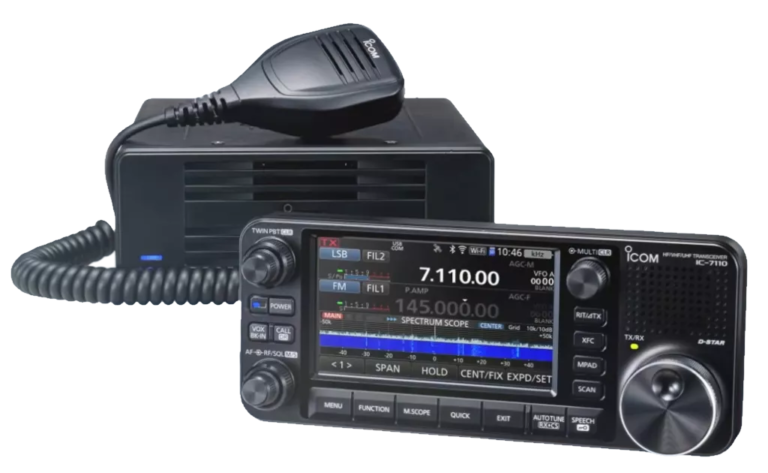
| 7.110 MHz | 40m (HF) | Swiss HF emergency | HF emergency frequency for Switzerland and Austria. National and international range. |
| 3.760 MHz | 80m (HF) | Region 1 HF emergency | IARU Region 1 (Europe) emergency frequency. Range of several hundred km. |
| 144.800 MHz | 2m (VHF) | APRS | Automatic radio position reporting network. Lets you send your GPS position without any infrastructure. |
Rega frequencies (air rescue)
| Channel | Frequency | Use | CTCSS |
|---|---|---|---|
| Channel E | 161.300 MHz | 🆘 Rega emergency channel, mountain distress | 123.0 Hz |
| Channel R | 159.200 MHz | Mountain rescue | 123.0 Hz |
| Channel K | 158.625 MHz | Operations coordination | 123.0 Hz |
📞 Swiss emergency numbers:
- 112, European emergency number (all services)
- 117, Police
- 118, Fire brigade
- 144, Ambulance
- 1414, Rega (air rescue)
- 1415, KCNS (mountain rescue)
- 143, La Main Tendue (emotional support helpline)
Note: these numbers only work if the telephone network is still up. That is why radio is essential.
📡 8. Radio amateurs: Switzerland's emergency network
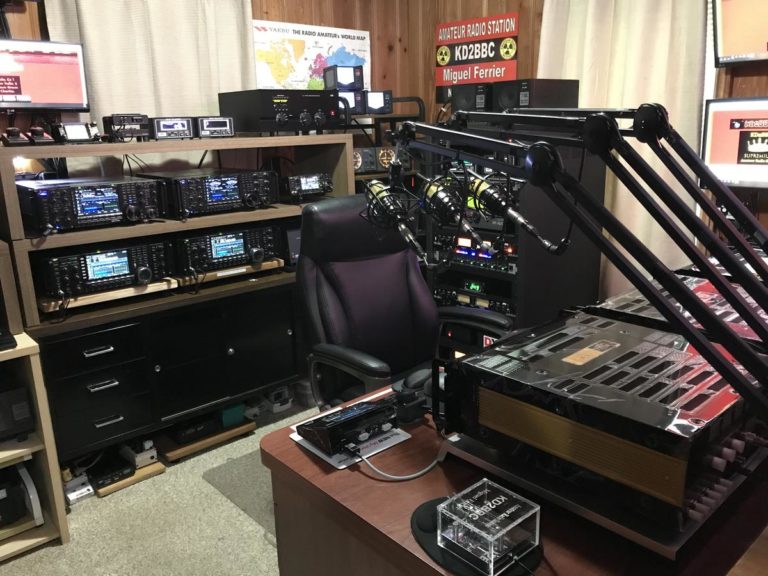
In a total blackout, radio amateurs (HB9xxx/HB3xxx callsigns) are the last working communication network. The USKA (Union Schweizerischer Kurzwellen-Amateure) coordinates a network of ~4,000 amateur radio stations across Switzerland, able to operate without any public infrastructure.
Swiss amateur radio repeaters (~85 VHF/UHF repeaters) have independent power supplies (batteries + solar)
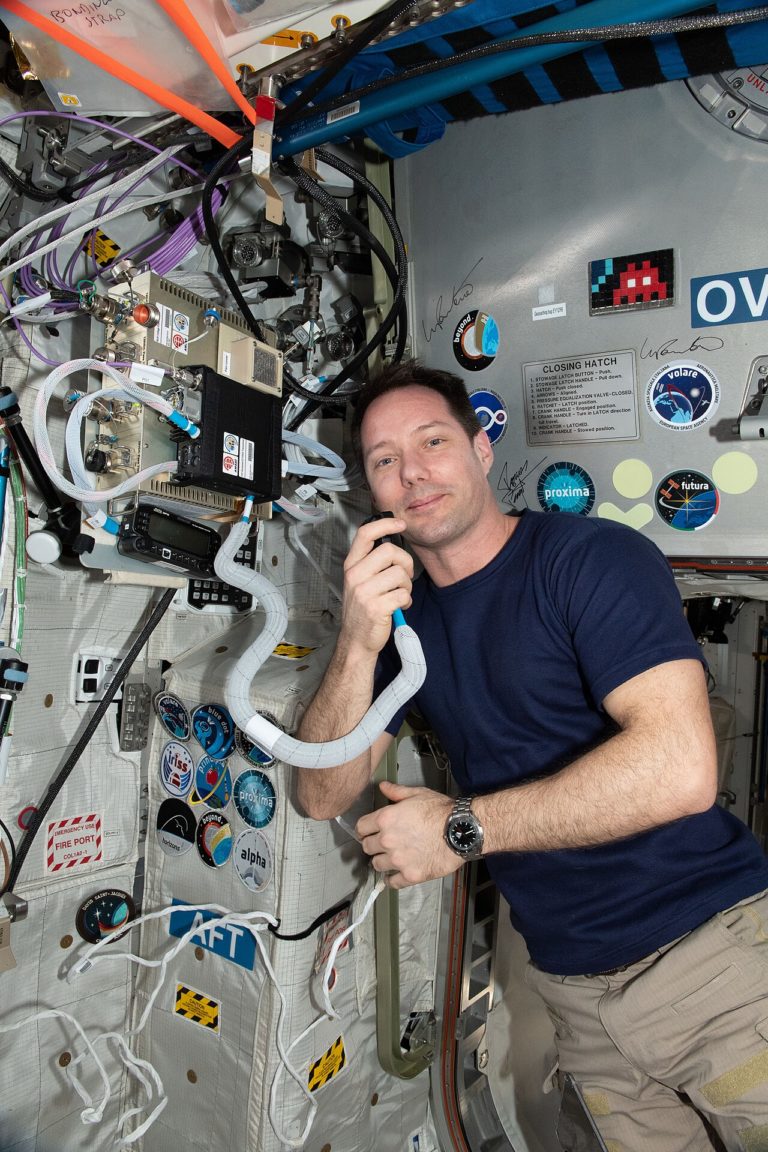
On HF (shortwave), radio amateurs can communicate worldwide without satellites or the Internet
The USKA has agreements with the cantonal authorities to provide emergency communications in disasters
How to become a radio amateur in Switzerland
To access the amateur bands and take part in emergency networks, you need an OFCOM licence:
- Study the exam syllabus: the USKA offers preparation courses throughout Switzerland. Subjects: regulations, radio technology, electronics, propagation.
- Pass the OFCOM exam: two levels, NOVICE (HB3) with limited privileges, or CEPT (HB9) with full access to all bands and power levels.
- Get your callsign: you receive a unique callsign (e.g. HB9ABC) that identifies you on the air.
- Get equipped and join a club: join a local USKA section such as HB9V (Radio Amateurs of Canton Vaud) to benefit from the members' experience and take part in emergency exercises.
✅ Even without an amateur radio licence, you can:
- Use CB (27 MHz) freely, 40 channels, no licence
- Use PMR446 licence-free walkie-talkies
- Contact a radio amateur via CB or PMR to relay an emergency message
- In a life-threatening emergency, the regulations allow any available means of communication to be used
Who to turn to
| Organisation | Role | Contact |
|---|---|---|
| USKA | National association of Swiss radio amateurs, Notfunk coordination | uska.ch |
| HB9V | Radio Amateurs of Canton Vaud, local USKA section for French-speaking Switzerland | hb9v.ch |
| OFCOM / BAKOM | Federal Office of Communications, the frequency regulator in Switzerland | bakom.admin.ch |
| SCBO | Swiss CB Organisation, community of Swiss CB operators | Local CB groups |
| Alertswiss | The official Swiss alert system, free mobile app for emergency alerts | alert.swiss |
📋 9. Complete checklist: your blackout kit
Here is a summary of all the equipment recommended to be ready for a blackout. Tick off each item as your preparation progresses.
📻 Communication
- 27 MHz CB set (base or portable)
- CB base or magnetic antenna
- Pair of PMR446 walkie-talkies
- DAB+/AM/FM emergency radio (hand crank + solar)
- Printed list of emergency frequencies
- Spare batteries (AA, AAA)
🔋 Power
- Portable power station (EcoFlow, Jackery...)
- Portable solar panel (100-200W)
- 12V cigarette-lighter cable for the CB radio
- USB power bank (20,000+ mAh)
- Charging cables (USB-C, Lightning, micro-USB)
- Rechargeable batteries + solar/USB charger
🔦 Lighting
- Powerful LED torch (rechargeable)
- LED head torch
- LED camping lantern
- Candles and matches/lighter
- Chemical light sticks (glow sticks)
🍽️ Food & water
- 9 litres of water per person (3 days)
- Non-perishable food (7 days)
- Portable water filter (Sawyer Mini)
- Purification tablets (Aquatabs)
- Camping gas stove + cartridges
- Camping crockery and cutlery
🏥 Health & hygiene
- DIN 13164 first aid kit
- Personal medication (7 days)
- 50 hygiene masks per person
- Hand sanitiser
- Toilet paper and bin bags
- Battery-powered CO detector
🔧 Tools & miscellaneous
- Multi-tool (Leatherman / Victorinox)
- Cash (CHF)
- Copies of important documents
- Mylar space blankets
- Winter sleeping bag (-10°C)
- Alertswiss app installed
⚡ 10. What to do in a blackout: step-by-step guide
- Stay calm: check whether it is a local fault (has a fuse blown?) or a general one (is the whole neighbourhood affected?). Look out of the window: if the whole neighbourhood is in the dark, it is a blackout.
- Save your batteries: put your smartphone in aeroplane mode. Don't waste the battery trying to connect to the network. Your phone will last much longer in aeroplane mode.
- Switch on your emergency radio: listen to the news on DAB+ (SRG SSR). The authorities will broadcast instructions by radio. The Alertswiss app can also notify you as long as your phone has a signal.
- Activate your CB station: connect your CB set to your portable power station via the 12V output. Listen to channel 9 (27.065 MHz) for emergency traffic. Report your presence and your situation.
- Hand out the PMR446 radios: give a walkie-talkie to each family member and agree on a channel (for example channel 1). That way you can stay in touch if someone has to go out.
- Manage your power: prioritise essential devices: CB radio, LED lighting, phone charging. If the blackout goes on, set up your solar panel during the day to recharge your power station.
- Keep an eye on the temperature: in a Swiss winter, the warmth in your home drops quickly. Gather in a single room, close the shutters and doors. Use blankets and sleeping bags. If you have a supplementary heater, switch on your CO detector.
- Ration water and food: if the blackout lasts more than 24 hours, start rationing. Use the perishable food from the fridge first (don't open the freezer: it keeps food frozen for 24-48h if it stays closed).
- Stay informed and look out for each other: listen to the radio, talk to your neighbours. In a prolonged outage, go to the municipal assembly points designated by the authorities. Help elderly and vulnerable people around you.
- Contact radio amateurs if necessary: if you need to pass on an emergency message beyond CB/PMR range, local radio amateurs can relay it through their VHF/UHF or HF networks. Call on 145.500 MHz or contact your local USKA section.
“In a crisis, communication is as vital as water and food. CB radio and PMR walkie-talkies are the only means of communication that work without any infrastructure: no mobile network, no Internet, no mains electricity. Get prepared today.”
🤝 Our partners

Phonicom.ch: amateur radio specialist in Switzerland
Phonicom offers a full range of CB accessories (antennas, dummy loads, coax, antenna mounts, magnetic bases), VHF antennas (Sirio, Diamond), portable power stations and emergency radio kits. The team will help you put together an emergency station suited to your situation. Fast delivery in Switzerland.
Visit phonicom.ch →