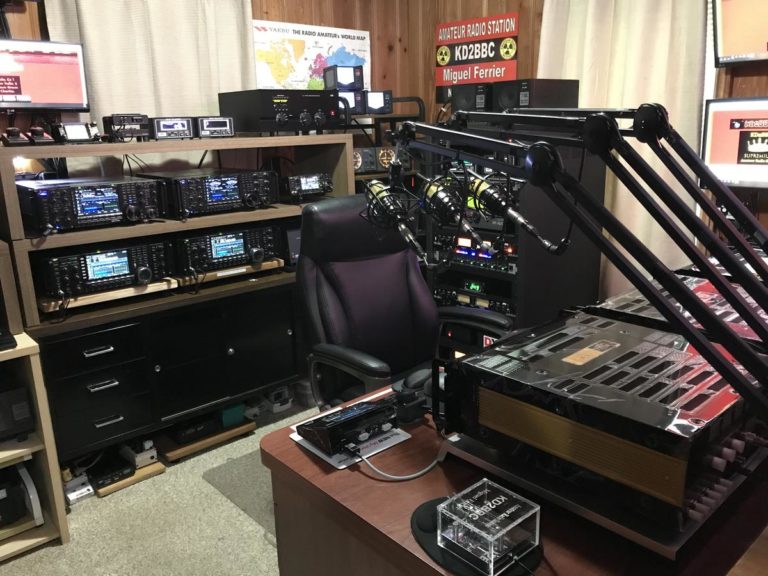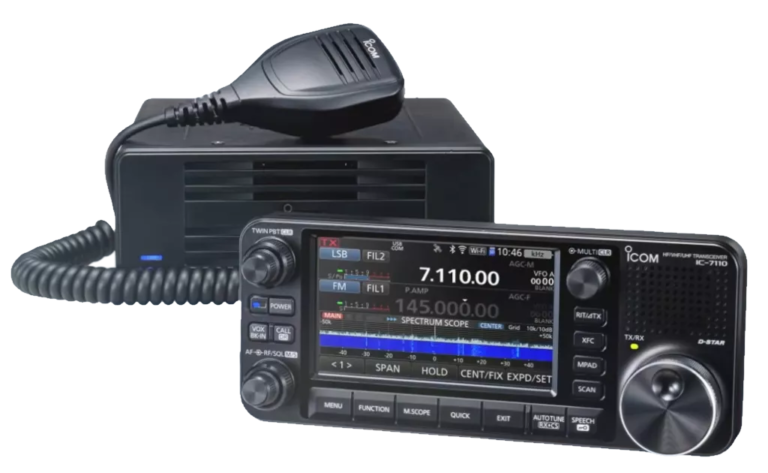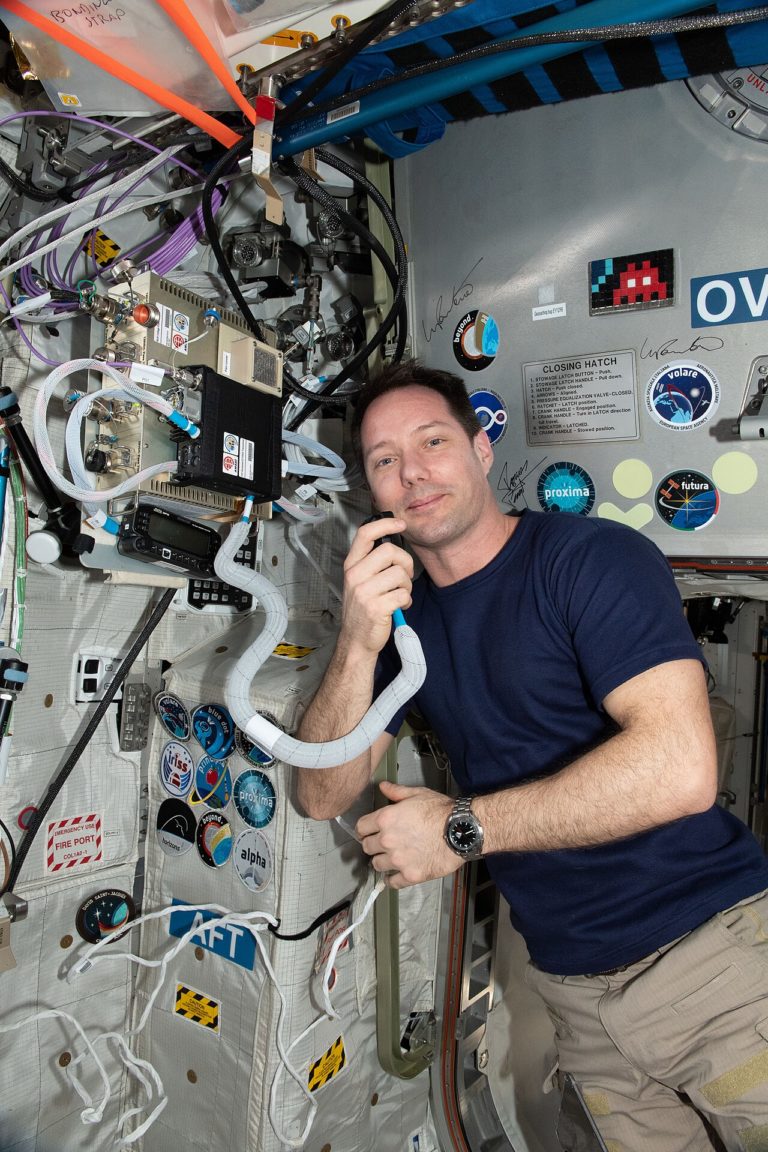
Historical background: the beginnings of amateur radio in Switzerland
The early years (1911-1926)
The history of amateur radio in Switzerland begins around 1911, at a time when the first transmission experiments took place with no legal basis and no oversight by the authorities. The first unofficial callsigns appeared on the air, freely chosen by the operators themselves. It was a period of pure experimentation, when the passion for radio communication took precedence over regulation.
A first law on telegraphy and telephony came into force on 1 January 1924, finally introducing an official transmitting licence. This regulation marked a decisive turning point for Swiss amateur radio, turning an unregulated hobby into an officially recognised service.
The evolution of callsigns: from H9 to HB9
In 1929, an important change was made to the identification system for Swiss radio amateurs. That year, callsigns changed from H9Xx to HB9x for radio amateurs (and from H9Rn to HBRn for short-wave listeners), in accordance with the 1927 Washington International Radiotelegraph Convention. This convention also redefined the frequency bands available to radio amateurs worldwide.
At that time, Switzerland had only 10 officially licensed radio amateurs, although many listeners were active. Amateur radio activity developed mainly in French-speaking Switzerland, and particularly in Lausanne, which became a real centre of amateur radio innovation.
According to a note published in the August 1929 T. & R. Bulletin of the Radio Society of Great Britain, sent in by XHB9MQ: “Conditions for amateur radio traffic in our country are very difficult, very few stations holding an official licence. Among the licensees, HB9D (Zurich) works telephony on 41.5 metres, HB9F (Lausanne), who incidentally is a woman, HB9Y and HB9G (also of Lausanne) are the most active.”
This historical observation reveals not only Lausanne's predominance in Swiss amateur radio in the 1920s, but also the remarkable presence of a woman radio amateur at a time when the activity was overwhelmingly male.
The Swiss pioneers
Among the notable pioneers of Swiss amateur radio, several figures left their mark on history:
Heinrich Degler (HB9A)
Switzerland's first licensed radio amateur (30 April 1926) and founder of the USKA. His callsign HB9A is one of the oldest and most prestigious in Switzerland.
Madeline Moret (HB9F)
This Lausanne resident obtained the eighth amateur radio licence on 1 May 1927. She is also a well-known figure in the Swiss feminist movement.
HB9D (Zurich)
A pioneer of amateur radio telephony, operating on 41.5 metres (about 7.3 MHz) from the 1920s.
HB9Y and HB9G (Lausanne)
Among the most active stations of the 1920s, helping to make Lausanne a major centre of amateur radio in French-speaking Switzerland.
Jacques Brocher (HB9V): portrait of a pioneer (1903-1987)
The beginnings of an enthusiast (1919-1931)
Jacques Brocher, affectionately nicknamed “Valentine” in amateur radio circles, was born in 1903. In 1919, aged only 16, he was bitten by the radio bug. He built his first crystal set and picked up the time signals from the Eiffel Tower using a 4-wire antenna, 120 metres long. This imposing antenna bears witness to his determination and early ingenuity.
From the very start, he took part in many practical radio experiments: the first tentative broadcasts of Radio-Lausanne, and those of the first transmitter of the League of Nations (Société des Nations), which very soon, once moved to Cointrin airfield, became the Radio-Genève transmitter.
He then left Geneva for Zurich to continue his studies. The radio bug went with him, and so he built a frame antenna on the best-oriented wall of his room to listen, in his spare time, to the local Höngg station and to broadcasts from other regions.
Hardship and perseverance (1927-1931)
In 1927, an accident during officer cadet school forced him to convalesce at altitude for more than four years. This difficult period turned into an opportunity: he now had time to get back to radio and “tinkering”. He built several regenerative receivers using A415 and B409 valves.
Then, after a few brief attempts at transmitting, he set about learning Morse code while refining his theoretical knowledge of radio engineering. He sat the amateur radio exam and on 1 April 1931 received his licence and the callsign HB9V.
The golden age and commitment (1932-1939)
In 1932, his health restored, he left the mountains and returned to Geneva. He resumed all his activities and, as the official station, followed the stratospheric expedition of Professor Auguste Piccard, the famous Swiss physicist and explorer.
That same year, he was appointed to the executive committee of the Société des Émissions de Radio-Genève and of the Société des Amis de Radio-Genève.
1933: founding president of HB9G
Launched the initiative to create the Groupement Genevois des Amateurs sur Ondes Courtes (Geneva Short Wave Amateurs Group), which soon afterwards became the Geneva Section of the USKA, and served as its first president.
1933: Action Romande
At the instigation of Otto Ess (HB9AE), he founded the Action Romande pour la Radio aux Aveugles et Invalides nécessiteux (a charity providing radios to blind and disabled people in need), which he ran until 1967.
1933: Auto-Radio innovation
Played a very active part in creating the Auto-Radio rallies, pioneering the mobile use of radio.
1934: USKA Central President
The USKA General Assembly in Basel entrusted him with the role of central president of the national organisation.
He was also appointed vice-president of the Fondation de la Maison Genevoise de la Radio and became a delegate to the Radio-Verband (Swiss Federation of Radio Amateurs), soon joining its committee.
It was during this period that he carried out his boldest experiments: radio expeditions by boat, by plane, on skis and in the mountains. It was in this context that he developed his famous “Lilliput” portable transceiver.
The “Lilliput” transceiver (1936)
In 1936, Jacques Brocher designed and built a remarkable piece of portable equipment: the “Lilliput” transceiver. This set, described in the June 1936 issue of OLD MAN magazine, was a technical feat for its time. In particular, he took part in the 1935 National Mountain Day, a pioneering mountain radio communications event.
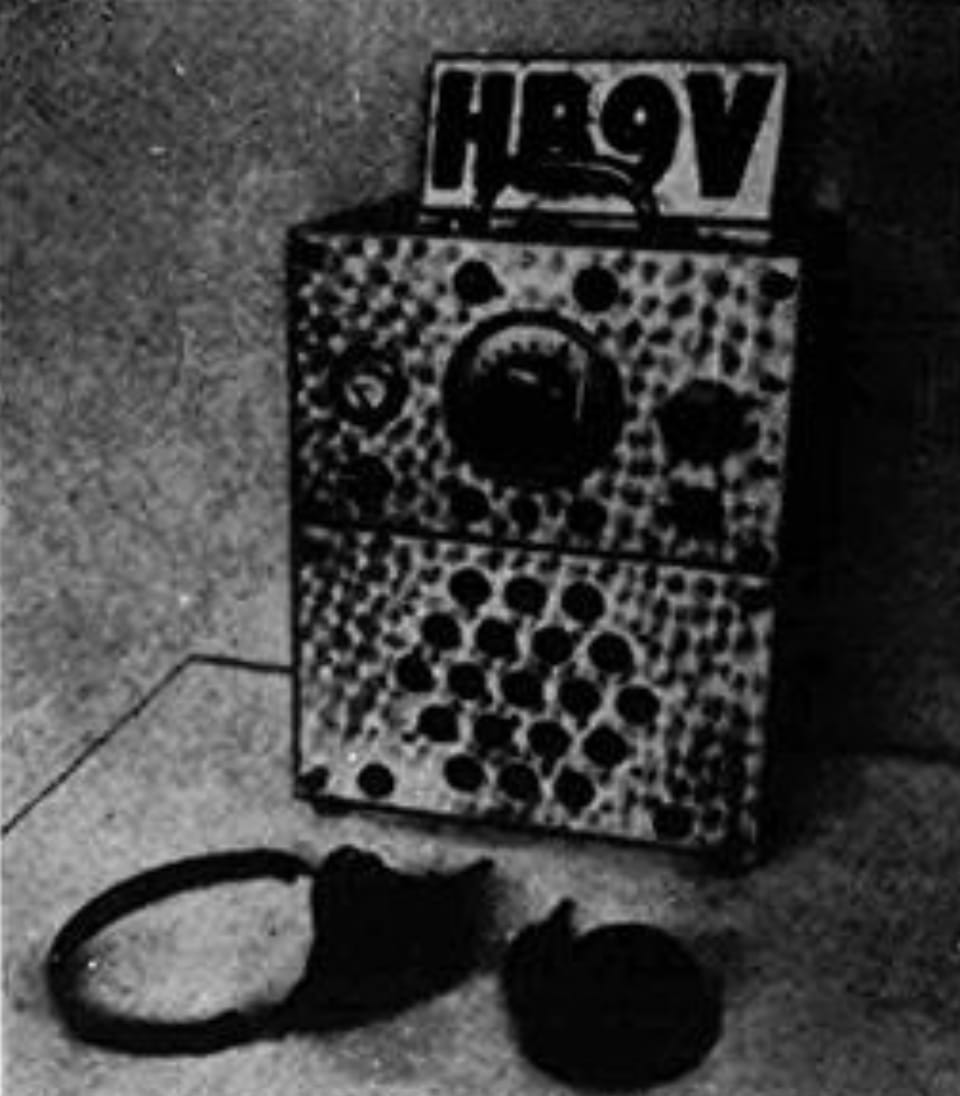
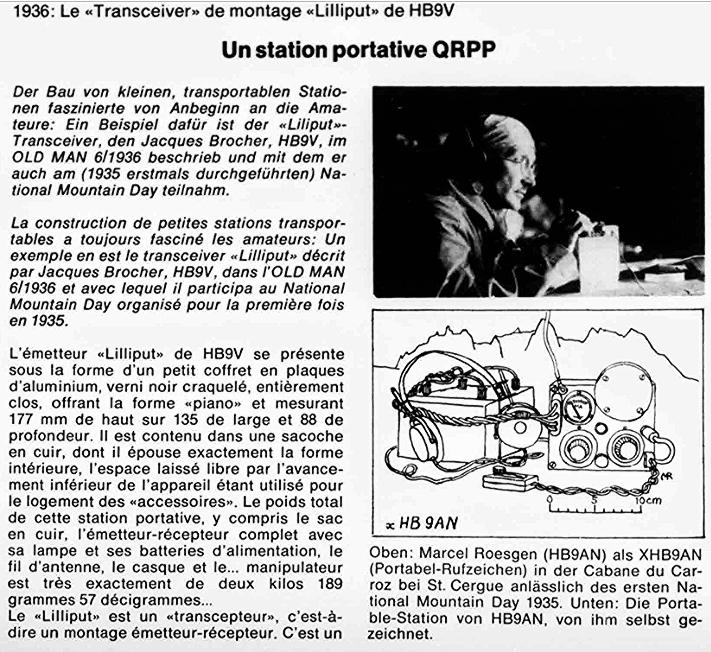
The “Lilliput” is a transceiver (“transciver” in the French of the time), that is to say a combined transmitter-receiver. This design was particularly innovative for its time, offering exceptional portability for outdoor and mountain operation.
Records and remarkable contacts
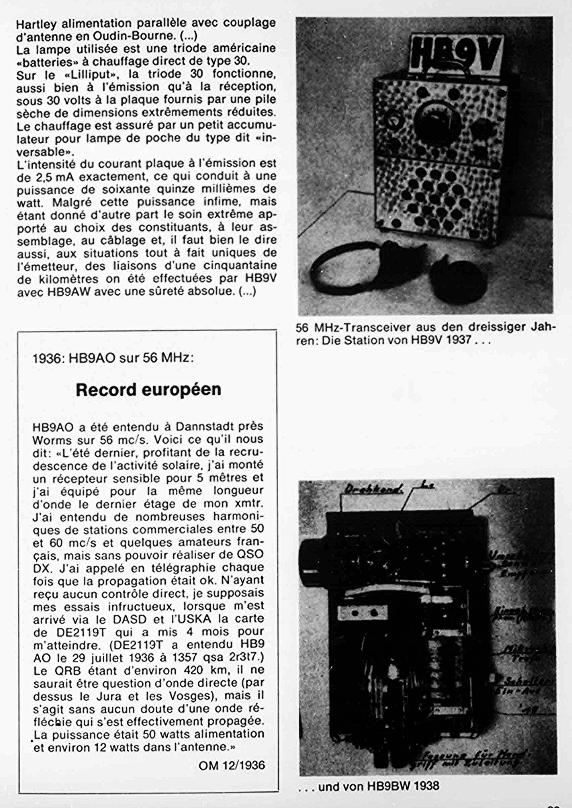
Exceptional contacts were made by HB9V and HB9BW in 1938, demonstrating the remarkable capabilities of the portable equipment of the time. These experiments on the VHF bands were particularly daring for the 1930s.
War and forced interruption (1939-1964)
1939: war broke out. Jacques Brocher found himself in the same situation as all Swiss radio amateurs. His radio equipment was impounded by the authorities and for about 25 years he gave up his amateur radio activity. This forced interruption was a major sacrifice for someone so passionate and active.
During this long absence from the airwaves, he did not remain idle:
- 1950: he took an interest in television and chaired the Geneva Television Committee
- 1954: he was a delegate to the Federal Commission for the study of cultural questions relating to television
Back on the air (1966-1987)
1966: the bug was back! After a quarter of a century away, Jacques Brocher returned to the airwaves. He operated on the 145 MHz (2 metre) and HF (short wave) bands. He took part regularly in the Grey Hair QSO (QSO des Cheveux Gris) until the end of November 1987, rediscovering the camaraderie and passion that had always driven him.
On behalf of the Geneva Section of the USKA and of all amateurs in Switzerland and neighbouring countries, Henri Besson (HB9FF) paid him a moving tribute: “After a life of intense activity, we will keep a fond and lasting memory of him.”
The HB9G club and its succession of presidents
The Geneva Radio Amateurs Club (HB9G) was founded in 1934 and remains one of the oldest and most prestigious amateur radio clubs in Switzerland. The succession of club presidents bears witness to the remarkable continuity of amateur radio activity in Geneva over the decades:
Marcel Roesgen (HB9AN) - first founding president. A pioneer of portable radio, known for his set-up in the Cabane du Carroz near St-Cergue during the first National Mountain Day in 1935.
Jules W. Brun (HB9AM)
Ernest Borgstedt (HE9RBZ) - early war years
Jacques Brocher (HB9V) - president during the Second World War
Gérard de Buren (HB9AW) - end of the war
Henri Besson (HB9FF) - the club's longest presidency (14 years)
Edouard Maeder (HB9GM)
Lars Nef (HB9VBE)
Eric Pampaloni (HB9EOY) - current president
The 1930s and 1940s: innovation and constraints
The 1930s were a period of intense innovation for amateur radio. Jacques Brocher perfectly embodies this pioneering spirit with his portable constructions and his experiments on the VHF bands. Building portable QRPP (very low power) stations fascinated the radio amateurs of the time, allowing long-distance communication with extremely limited means.
The “Lilliput” transmitter used an American type 30 triode, working both on transmit and on receive with 30 volts on the plate. The plate current on transmit was exactly 2.5 mA, giving a power of seventy-five milliwatts. Despite this tiny power, the results were remarkable. Contacts over some fifty kilometres were made by HB9V and HB9AW with complete reliability.
The war years (1940-1945)
The 1940s were a crucial and difficult period for amateur radio worldwide. During the Second World War, many countries suspended or strictly regulated amateur radio activity for reasons of national security. In Switzerland, although the country remained neutral, radio amateurs had to follow strict rules regarding their transmissions, the authorised frequencies and the content of their communications.
It was in this context that Jacques Brocher (HB9V) chaired the HB9G club. Radio amateurs of the time showed great resilience, keeping up their activity despite the constraints and sometimes contributing to communications monitoring efforts.
At the end of the Second World War, HB7 callsigns were briefly used for test purposes. About thirty stations took part in these tests, which allowed the amateur radio service to resume gradually after the war years. The HB7 prefix was used again in 1979 for the USKA's 50th anniversary, allowing radio amateurs to temporarily replace the “9” in their callsign with a “7”.
The evolution of the callsign system in Switzerland
The different categories of callsigns
The Swiss amateur radio callsign system has evolved considerably over the decades to keep pace with the growing number of radio amateurs and the different licence levels. Here are the main categories that have existed or still exist:
HB9x (1929-1932)
The first short, single-letter callsigns for the licensed pioneers. Very prestigious and rare today.
HB9xx
Two-letter callsigns for full licences, issued in chronological order.
HB9xxx
The current format for full licences, with three letters. It has been the standard format since the 1980s.
HB3xxx (since 2000)
“Novice” licence with limited power (100W), giving access to the VHF/UHF bands and some HF bands.
HB4
Prefix reserved for Swiss military stations.
HE9
Callsigns issued by the USKA to short-wave listeners (SWL) without transmitting privileges, in existence since at least 1960.
The 1960s to 1980s: two licence levels
From around 1967, two types of licence coexisted in Switzerland, creating a clear distinction between radio amateurs according to their skills and privileges:
- The “full” licence (HB9Axx): allowing the use of the short waves, granted after a radiotelegraphy exam that necessarily included proficiency in Morse code. This licence gave access to all the amateur radio frequency bands.
- The “technician” licence (HB9Mxx then HB9Pxx): allowing transmission only on the VHF (144MHz) and UHF (430MHz) bands, with no Morse requirement. This licence was more accessible but limited in terms of authorised frequencies.
During this period, callsigns were issued in strict alphabetical order, which makes it possible to date their issue approximately. For example, the HB9Dxx series corresponds to the 1980s. This chronological system made it easy to identify the relative seniority of radio amateurs.
Modernisation of the system (1987 to today)
In 1987, a major reorganisation took place with new operating and licensing regulations from the P.T.T. (Post, Telephone and Telegraph). Callsigns were then issued by one of the 17 regional Telephone District Directorates (DAT), decentralising licence management.
Each DAT allocated callsigns according to a specific logic: letters from the first half of the alphabet were reserved for full licences (levels 1 and 2) and letters from the second half for restricted licences (levels 3 and 4).
In 1995, callsign management was taken over by OFCOM (Swiss Federal Office of Communications), which became the sole supervisory authority for the radio spectrum throughout Switzerland. This centralisation improved the consistency and efficiency of the allocation system.
Special and temporary callsigns
Over the years, several special prefixes have been used temporarily to celebrate particular events:
- HB7 (1945 and 1979): used after the war for the resumption tests, then in 1979 for the USKA's 50th anniversary
- HB2 (2000): special prefix to celebrate the year 2000
- HE7 (1991): used to celebrate the 700th anniversary of the Swiss Confederation
- HE3RSI (2004): first use of the HE3 prefix, for the activation of the RSI antenna at the Sottens site
- HE1TELE (2005): allocated to radio amateurs from Valais for the Telethon
The reassignment of HB9V to the Radio Amateurs of Canton Vaud club (2025)
A historic callsign comes back to life
After more than eight decades of existence and probably a long period of inactivity, the HB9V callsign was officially reassigned in 2025 to the Radio Amateurs of Canton Vaud. This reassignment marks a historic moment for amateur radio in Vaud and creates a direct link with Switzerland's amateur radio heritage.
Meaning and symbolism of HB9V
The choice to reassign the HB9V callsign to the Vaud club is no coincidence and carries several layers of meaning:
HB9: full licence
The HB9 prefix identifies Switzerland and indicates a full licence with access to all bands and privileges.
V: Vaud and its people
The letter “V” naturally evokes Canton Vaud and the Radio Amateurs of Vaud, creating a clear and memorable identity.
Historical heritage
A direct connection with amateur radio history going back to Jacques Brocher in 1931, preserving the memory of more than 90 years of activity.
Simplicity and prestige
A short, single-letter callsign is rare and prestigious, easy to remember and recognise on the bands.
The HB9V infrastructure today
With the HB9V callsign, the club is developing a modern and comprehensive amateur radio infrastructure in Canton Vaud, embracing both traditional technologies and the latest digital innovations:
- VHF/UHF repeaters: repeater stations for analogue voice (FM) and the C4FM digital modes, and Wires-X, covering the Lausanne area and its surroundings
- YSF reflectors: Yaesu System Fusion servers connecting radio amateurs in digital mode across Switzerland and around the world
- Multi-protocol gateways: XLX and MMDVM systems allowing interconnection between different digital modes (DMR, YSF, D-STAR, P25)
- Technical website (hb9v.ch): a comprehensive platform with detailed tutorials, installation guides and technical documentation
- Regular activities: section QSOs, various events and outings
Amateur radio in Vaud: a continuing tradition
Lausanne, cradle of amateur radio in French-speaking Switzerland
It is worth stressing that Lausanne and Canton Vaud played an absolutely central role in the development of amateur radio in French-speaking Switzerland from the 1920s onwards. The callsigns HB9Y, HB9G and HB9F (Madeline Moret) in Lausanne were among the most active in the pioneering years, contributing significantly to technical experimentation and to the first long-distance contacts.
This tradition of innovation and technical excellence lives on today with the Radio Amateurs of Canton Vaud club under the HB9V callsign. The club continues to actively promote amateur radio in the region, to encourage new generations of radio amateurs and to maintain a quality infrastructure serving the community.
HB9V club activities
The modern HB9V club carries on the pioneers' spirit through a wide range of activities covering every aspect of amateur radio:
Licence courses
The HB9V club does not currently offer preparation courses for the HB3 and HB9 exams. These courses are given by the HB9MM club, which organises complete sessions with theoretical and practical material suited to all levels.
Technical exchange
Hands-on exchange between members on antennas, propagation, digital modes, building equipment and troubleshooting.
Infrastructure and maintenance
Development, maintenance and continuous improvement of the canton's repeaters, reflectors and digital systems.
Multilingual documentation
Writing detailed technical tutorials on amateur radio systems, first in French (where such resources are scarce) and now also in German, Italian and English.
Events and contests
The club will take part in national and international contests. Organising events and trips to amateur radio conventions in Europe, notably Friedrichshafen, one of the largest Ham Radio conventions in the world.
An active community
Regular section QSOs, friendly get-togethers, sharing of experience and mutual help between members of all levels.
Complete timeline of the HB9V callsign
Here is the detailed timeline tracing the evolution of the HB9V callsign within the wider context of the history of Swiss amateur radio:
Beginnings of amateur radio in Switzerland, with no legal framework. The first experimenters chose their own callsigns.
Jacques Brocher, aged 16, builds his first crystal set and picks up the time signals from the Eiffel Tower
Jacques Brocher founds the Radio-Club Genevois (later HB9G) at the age of 18
The first law on telegraphy and telephony comes into force, introducing official transmitting licences.
Heinrich Degler obtains the first official Swiss callsign: H9XA (later HB9A). He later founds the USKA.
Madeline Moret obtains the eighth Swiss licence with the callsign H9XF (later HB9F), becoming a female pioneer of amateur radio.
Historic change of callsigns from H9Xx to HB9x for Swiss radio amateurs. Official introduction of the “HB” prefix for the Helvetic Confederation. Switzerland has 10 licensed radio amateurs.
Jacques Brocher receives his licence and the callsign HB9V - “V for Valentine”
Publication of the first official list of some twenty HB9x callsigns. Jacques Brocher follows Professor Auguste Piccard's stratospheric expedition as the official station.
Jacques Brocher launches the Groupement Genevois des Amateurs sur Ondes Courtes (later the HB9G section of the USKA) and becomes its first president
Jacques Brocher is elected central president of the USKA at the General Assembly in Basel
Jacques Brocher builds the “Lilliput” portable transceiver with the HB9V callsign - takes part in the National Mountain Day. Published in OLD MAN.
Remarkable contacts made by HB9V and HB9BW on the VHF bands
Outbreak of the Second World War. Jacques Brocher's radio equipment is impounded, like that of all Swiss radio amateurs.
Jacques Brocher (HB9V) becomes president of the HB9G club - a presidency in the middle of the Second World War
End of the Second World War. Temporary use of the HB7 prefix for tests to resume amateur radio activity (about 30 stations take part).
Issue of the mysterious “Fabriklizenzen” (manufacturer licences) with the HB8 prefix. There are 18 HB8Vx licences, all in German-speaking Switzerland.
Jacques Brocher takes an interest in television and chairs the Geneva Television Committee
Delegate to the Federal Commission for the study of cultural questions relating to television
Jacques Brocher returns to amateur radio after a 25-year break. He operates on 145 MHz and the HF bands.
Introduction of two types of licence: full (HB9Axx with Morse) and technician (HB9Mxx then HB9Pxx, VHF/UHF only).
USKA 50th anniversary: special use of the HB7 prefix (radio amateurs may replace the “9” in their callsign with a “7”).
Death of Jacques Brocher (HB9V) at the age of 84 - after a life devoted to amateur radio and technical innovation
Major reorganisation of the callsign allocation system. Callsigns issued by the 17 regional Telephone District Directorates (DAT).
700th anniversary of the Swiss Confederation: use of the special HE7 prefix.
OFCOM (Swiss Federal Office of Communications) takes over centralised callsign management for the whole of Switzerland.
Introduction of the HB3xxx “novice” licence with limited power (100W), making amateur radio easier to get into. Use of the HB2 prefix to celebrate the year 2000.
Historic removal of the Morse code requirement for the full HB9 licence, bringing Switzerland into line with modern international practice.
Official reassignment of the HB9V callsign to the Radio Amateurs of Canton Vaud club by OFCOM - after 89 years, the callsign comes back to life and carries on its historical legacy.
Conclusion: a living legacy
The history of the HB9V callsign is closely bound up with the evolution of amateur radio in Switzerland, reflecting more than a hundred years of passion for radio and communications. From Jacques Brocher, who built his “Lilliput” transceiver in 1936 and chaired the HB9G club in the middle of the Second World War in 1942, to its reassignment to the Radio Amateurs of Canton Vaud club in 2025, this callsign embodies nearly nine decades of technical innovation, camaraderie and exploration of the possibilities offered by radio waves.
This historical journey reminds us that amateur radio has always been a resilient activity, able to adapt to technological change, regulatory developments and the challenges of each era. From the early pioneers building their valve transmitters in the 1920s to today's radio amateurs exploring sophisticated digital modes and satellite links, the spirit of experimentation and discovery remains intact.
Today, HB9V is much more than just a technical callsign. It is a symbol of the amateur radio heritage of Vaud and Switzerland, a bridge between yesterday's pioneers and tomorrow's innovators. It is also an active, welcoming and lively community that continues to promote technical experimentation, lifelong learning, international exchange and the values of sharing that have characterised amateur radio since its beginnings.
Canton Vaud, and Lausanne in particular, a nerve centre of Swiss amateur radio from the 1920s with pioneers such as Madeline Moret (HB9F), keeps this tradition of excellence alive. The modern infrastructure developed by HB9V since 2025, combining analogue and digital repeaters, YSF reflectors, multi-protocol gateways and quality technical documentation, bears witness to this continuity of innovation.
The HB9V callsign will keep evolving with the times, embracing future technologies while preserving the spirit of innovation, camaraderie and service that has always characterised amateur radio. Whether you are an experienced radio amateur looking to reconnect with your roots, a technology enthusiast drawn to radio communications, or simply curious about this fascinating hobby, the history of HB9V invites you to discover or rediscover the magic of radio waves.
For new generations of radio amateurs, HB9V offers a unique opportunity to become part of a century-old tradition while helping to shape the future of communications. In a world increasingly connected by the Internet and digital technologies, amateur radio offers a unique alternative: the ability to communicate directly, with no intermediate infrastructure, using the natural phenomena of radio wave propagation to make contacts across continents and oceans.
Resources and references
Further reading
If this article has sparked your interest in the history of amateur radio or in the hobby itself, here are some useful resources:
- Official HB9V website: hb9v.ch - detailed technical tutorials, club information, calendar of activities
- OFCOM: Swiss Federal Office of Communications - Swiss regulations, exam information, band plan
- USKA: Union of Swiss Short Wave Amateurs - national organisation, preparation courses, technical journal
- Historical archives: T. & R. Bulletin of the Radio Society of Great Britain (archives from the 1920s and 1930s)
How to become a radio amateur in Switzerland
If this article has made you want to join the amateur radio community and help write the next chapter of this story, here are the steps to getting your own callsign:
- Contact a local club: get in touch with the HB9V club for Canton Vaud, or another club in your region. Clubs regularly hold open days and demonstrations.
- Take preparation courses: attend courses organised by the USKA or regional clubs (in the Vaud area, by the HB9MM club). These courses cover electrical theory, regulations, radio technology and operating procedures.
- Choose your licence level: HB3 licence (novice, 100W) to start with, or go straight for HB9 (full, 1000W) if you want all the privileges from the outset.
- Pass the OFCOM exam: the exam takes place in Biel/Bienne and covers technical and regulatory knowledge. No Morse test has been required since 2003.
- Receive your personal callsign: once you have passed the exam, OFCOM assigns you your unique callsign (HB3xxx or HB9xxx depending on your licence).
- Start making QSOs: take the plunge! Contact other radio amateurs, take part in club activities, experiment with different modes and frequency bands.