Breaking news
The contact takes place today, Friday 27 November 2026, at 15:23 Swiss time. Tune your receiver to 145.800 MHz FM from 15:20 and listen for about ten minutes. The “Where is the ISS right now?” tool further down shows you the exact time and the direction from where you are. A handheld with its stock antenna is enough, preferably outdoors or near a window facing west and north.
This Friday, 27 November 2026, at 15:23 Swiss time, Canadian astronaut Joshua Kutryk will answer questions from pupils at the François Cevert vocational school in Écully, near Lyon, from the International Space Station. The link runs through the F8KLY radio club, and the astronaut's voice comes down on 145.800 MHz, a frequency that can be received very well from anywhere in Switzerland with a simple handheld.
The Spanish website EA1URO flagged this event during the night of 26 to 27 November. We went through the official announcements from ARISS and ARISS francophone, then calculated the ISS pass over our towns. Here you will find everything you need to listen to the contact, or to watch it again if it has already taken place by the time you read this.
Where is the ISS right now?
This tool calculates the space station's position live and its pass over your location. Tap “Locate me” or choose a city from the list. You will then know what time the ISS rises, which direction to point your antenna and how much to correct the frequency for Doppler shift. The map shows the station, its track over the next few minutes and the area from which it can be heard.
Interactive tool: open this article on hb9v.ch to follow the ISS live from your location.
A school near Lyon live with space
ARISS (Amateur Radio on the International Space Station) organises between 60 and 100 radio contacts every year between pupils and astronauts who hold an amateur radio licence. The Écully contact is a direct contact. The school station, operated by the radio amateurs of the F8KLY radio club, talks to the ISS itself, without going through a relay station on the other side of the world. The project's ARISS mentor is F6ICS.
On board, the radio station will be active under the callsign OR4ISS, and Joshua Kutryk, KJ5BFU, will take the microphone. The conversation will be in French. The pupils have prepared sixteen questions, from “Were you scared when the rocket took off?” to “How do you sleep on the space station?”, by way of “What do you eat on the ISS?”. According to the ARISS schedule updated on 25 November, the contact is confirmed for 14:23:13 UTC, with a maximum elevation of 32° seen from Écully.
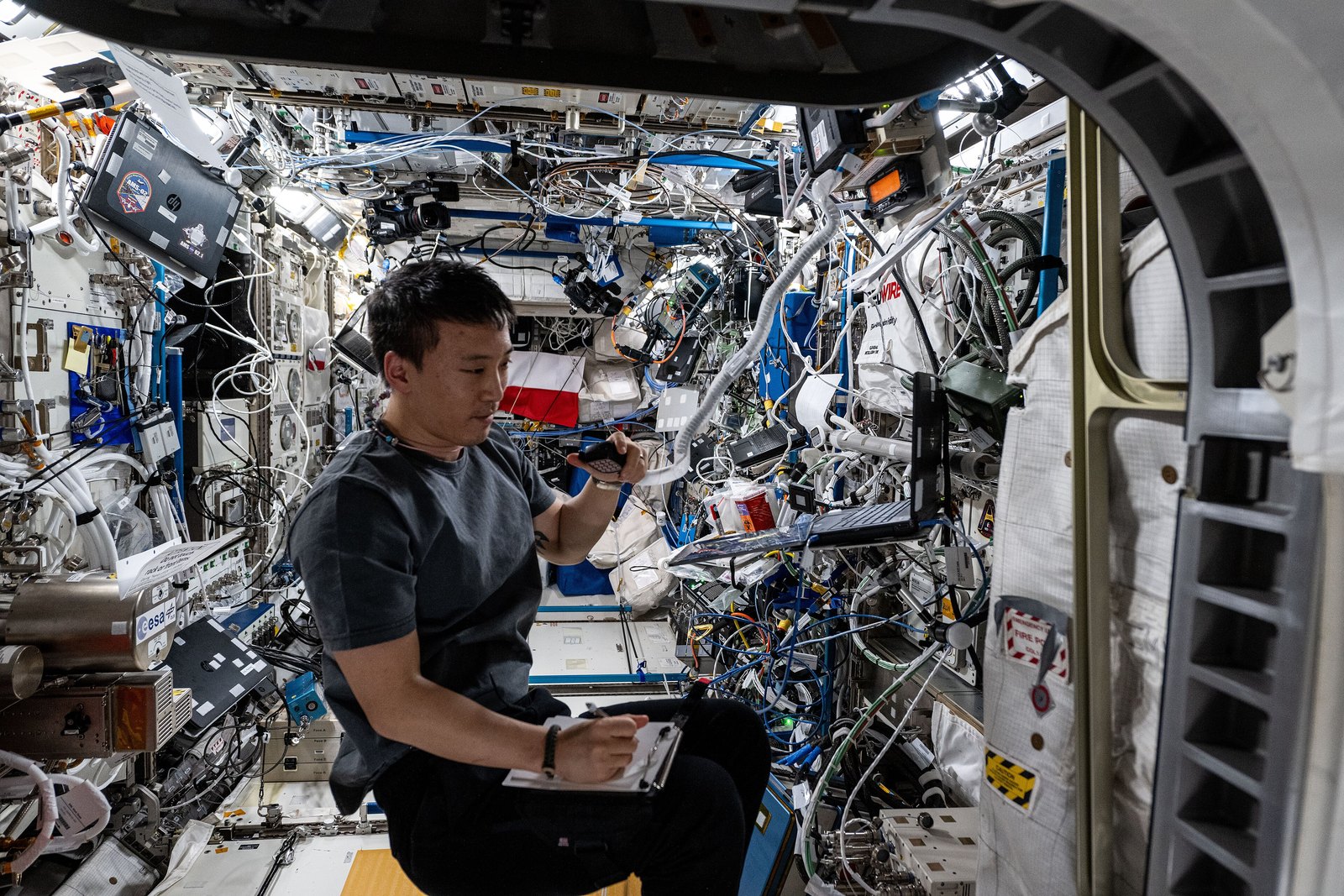
NASA astronaut Jonny Kim during an amateur radio session in the ISS's European Columbus module, 29 June 2025. Photo: NASA Johnson Space Center, Wikimedia Commons, public domain.
Joshua Kutryk, KJ5BFU
A colonel in the Royal Canadian Air Force and former test pilot, Joshua Kutryk is a Canadian Space Agency astronaut. He was originally due to fly on Boeing's Starliner capsule, before that mission was turned into an uncrewed cargo flight. In April 2026 the agency assigned him to NASA and SpaceX's Crew-13 mission. He lifted off from Cape Canaveral on 1 October 2026 with Jessica Watkins, Luke Delaney and Sergey Teteryatnikov, for a stay of about six months aboard the ISS.
This is his first spaceflight. He is the fourth Canadian astronaut to carry out a long-duration mission on the station. He has already led several ARISS contacts since his arrival. On 13 November, for example, he answered pupils from the École secondaire du Sommet in Halifax. On the same day as the Écully contact he will also talk to students in Monterrey, Mexico, but that second pass will be out of reach of our antennas.
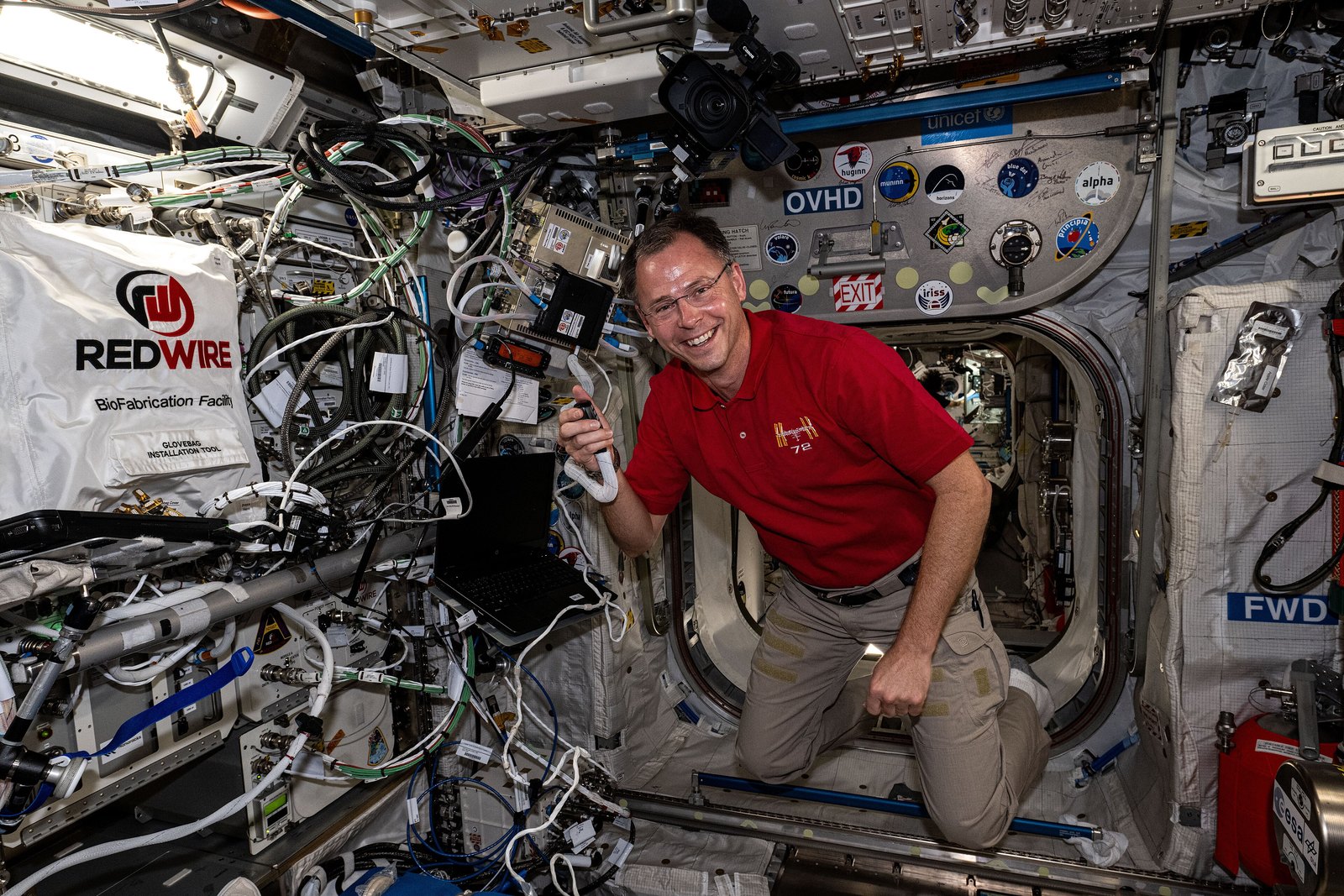
NASA astronaut Nick Hague in radio contact with pupils in Quebec, 11 October 2024. Photo: NASA Johnson Space Center, Wikimedia Commons, public domain.
Listening to the contact from Switzerland
Écully is less than 120 km from Geneva. The ISS flies at an altitude of about 400 km and stays above the horizon for more than 2000 km around. When the school can hear it, the whole of Switzerland can hear it too. We calculated the pass for a few towns using the orbital elements published by CelesTrak on 27 November (Swiss time, to within a minute).
| Location | Rise (west) | Highest point (north) | Set (east-north-east) |
|---|---|---|---|
| Geneva | 15 h 24 | 15 h 29, 34° | 15 h 34 |
| Lausanne | 15 h 24 | 15 h 29, 35° | 15 h 35 |
| Bern | 15 h 24 | 15 h 29, 38° | 15 h 35 |
| Zurich | 15 h 24 | 15 h 30, 40° | 15 h 35 |
| Lugano | 15 h 24 | 15 h 30, 31° | 15 h 35 |
| Chur | 15 h 24 | 15 h 30, 36° | 15 h 35 |
These times assume a perfectly clear horizon. Here, the Jura, the Prealps or simply the neighbours' roofs hide the beginning and end of the pass. Count instead on seven or eight minutes of useful listening, once the station has cleared the terrain. The ISS rises in the west, passes to the north and then sets towards the east. A north-facing balcony or garden will do nicely.
The equipment could hardly be simpler. A VHF handheld, a scanner or an SDR dongle tuned to 145.800 MHz narrowband FM is enough when the station is high. A vertical antenna in the clear, or better still a small handheld Yagi pointed at the ISS, makes listening noticeably more comfortable. The Doppler effect shifts the signal by about 3 kHz. If your radio tunes in 5 kHz steps, start on 145.805 MHz, return to 145.800 MHz in the middle of the pass and finish on 145.795 MHz.
You will only hear half of the conversation, because only the astronaut's voice comes down on 145.800 MHz. The pupils' questions go up to the station on another frequency, which cannot be heard from home. To follow the whole exchange, open F8KLY's live stream on Twitch or YouTube at the same time.
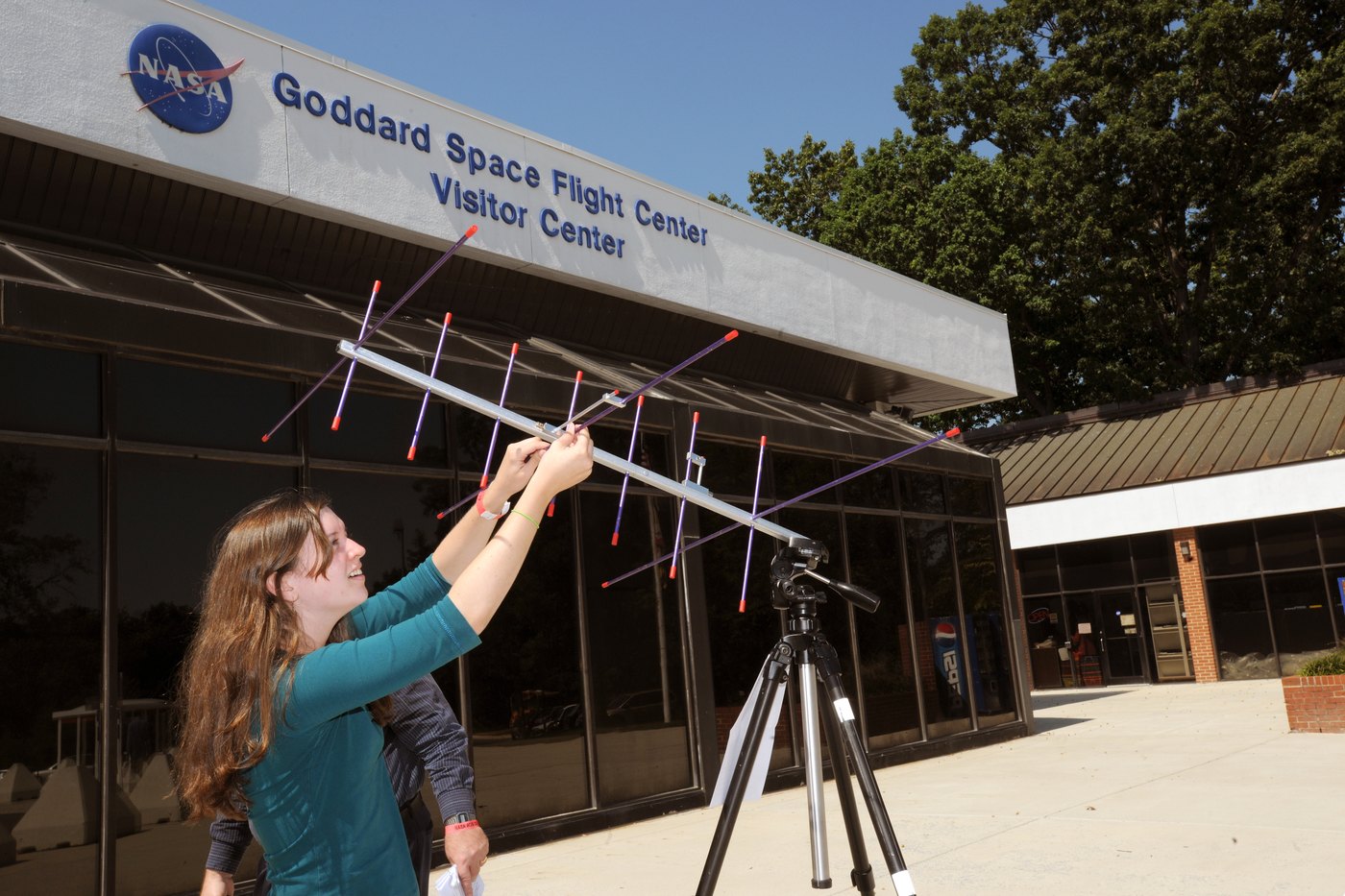
A small Yagi antenna on a tripod, pointed at the ISS during an ARISS contact at NASA's Goddard centre, 13 September 2012. Photo: NASA Goddard Space Flight Center, Wikimedia Commons, CC BY 2.0.
Listen, yes. Transmit, no. No licence is needed to listen to the space station. During a school contact, however, never transmit towards the ISS, even with an HB3 or HB9 licence. These few minutes have been prepared for months by the school and by ARISS, and every second counts for the pupils.
HamTV, live pictures on 2.395 GHz
EA1URO reports that a HamTV transmission may be attempted during the contact. HamTV is an amateur digital television transmitter installed in the European Columbus module. It transmits in DVB-S on 2395 MHz, with a power of around 10 W EIRP. Receiving it requires a dish that tracks the station throughout its pass, which is beyond the equipment of an ordinary shack. The simplest option is to watch the ARISS HamTV page, which relays the pictures picked up by ground stations, or F8KLY's stream.
If the contact has already taken place
The F8KLY radio club streams live on Twitch and on its YouTube channel, where the recording should remain available. And there will be other opportunities. The ARISS schedule includes a contact on Monday 30 November 2026 at 14:39 Swiss time between astronaut Luke Delaney, KJ5PPF, and the Centrum Promocji Kultury in Warsaw, via the SP5KAB station. According to our calculations, the space station will be above the Lausanne horizon from 14:37 to 14:47, with a maximum elevation of 33° to the north. That contact should therefore also be audible on 145.800 MHz from Switzerland, even though the language of the exchange has not been announced.
These events can change at the last minute, depending on the crew's workload. Before you set up, check the ARISS Upcoming Educational Contacts page, which is updated every week.
An ARISS contact in Geneva in 2014
Switzerland has experienced such a moment before. On 17 September 2014, 4U1ITU, the amateur radio station of the International Telecommunication Union in Geneva, hosted an ARISS contact with pupils from the Institut Florimont. Schools that dream of doing the same apply to ARISS, whose website explains the procedure in its “Apply to Host an ARISS Contact” section. Our article on radio amateurs, the Moon and the Artemis programme broadens the subject to space exploration and also covers ARISS.
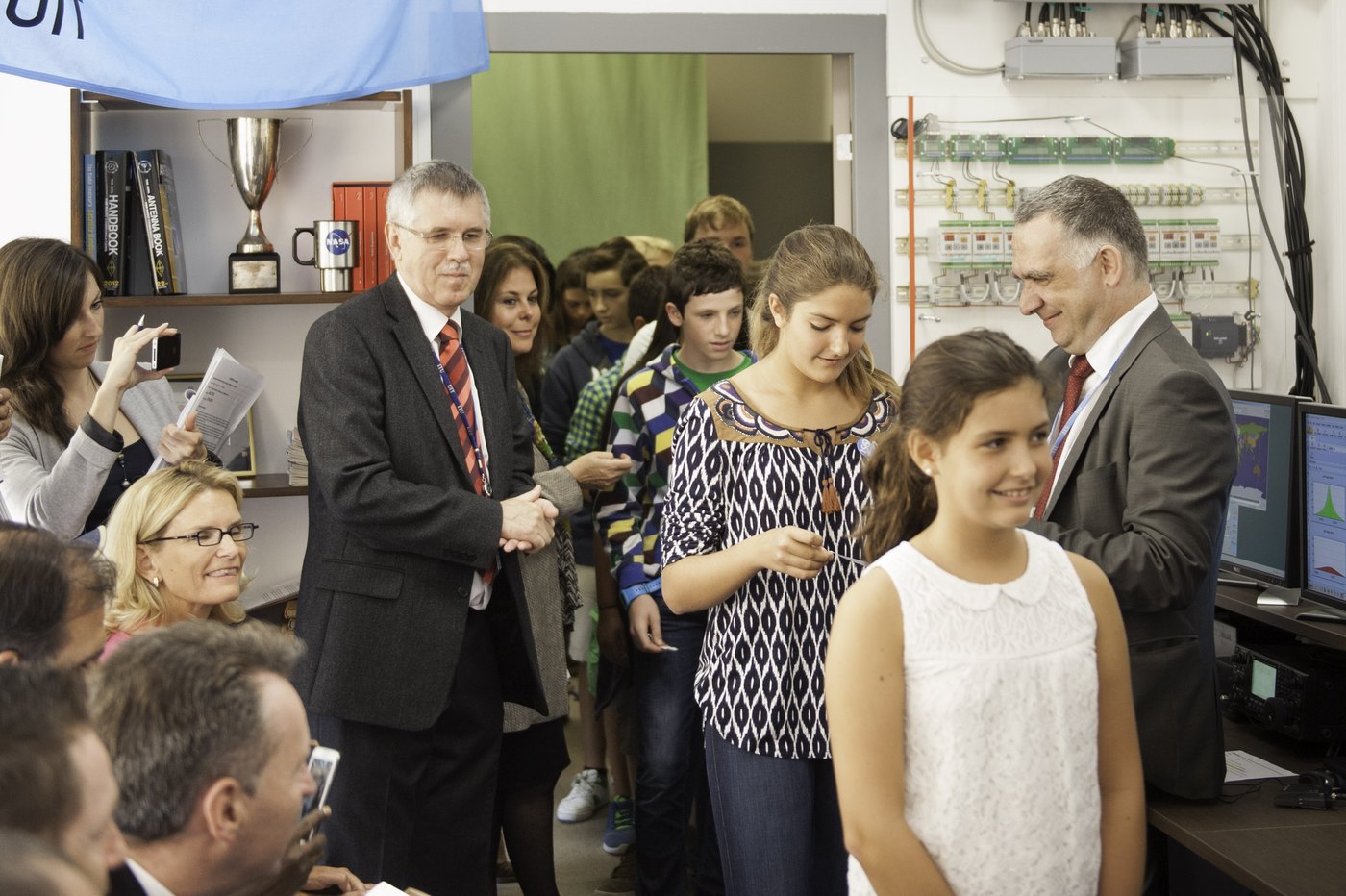
Pupils from the Institut Florimont at the ITU's 4U1ITU station in Geneva, during the ARISS contact of 17 September 2014. Photo: ITU/F. Scotti, Wikimedia Commons, CC BY 2.0.
A word from HB9V
An ARISS contact remains one of the finest showcases for amateur radio. Pupils put their questions to an astronaut, thanks to a station set up in their school by volunteers. And anyone can enjoy it from their balcony, with the handheld sleeping in the drawer. Hearing an astronaut's voice arrive straight from orbit never fails to make an impression.
HB9V does not organise ARISS contacts. If you listened to the pass on 27 November or the one on the 30th, tell us about your setup, where you listened from and what you heard. We would love to know how far into our valleys Joshua Kutryk's voice reached.
Our partners
Find out more
The official ARISS contact schedule, the ARISS francophone announcement and the F8KLY radio club's live streams.
Also on HB9V
- Radio amateurs and the Moon, from ARISS to Artemis
- HB9HIN's station, all the way to the QO-100 satellite
- The Swiss amateur radio band plan
- The Yagi antenna, the complete guide
- SDRberry on Raspberry Pi, the installation guide
Sources: EA1URO, “Hoy Viernes astronauta contactará con Francia : 145.800 y posible video en 2.395 Ghz”, 27 November 2026; ARISS, “Upcoming Educational Contacts”, as of 25 November 2026; Micol Ivancic, ISS Fan Club, “ARISS School Contact 27 November 2026, 14:23 UTC, direct via F8KLY”, 25 November 2026; F1AFW, ARISS francophone, “Contact radioamateur du 27/11/2026, F8KLY”, 24 November 2026; F6KMF, “Contact ARISS cette semaine avec la France !”, 24 November 2026; Canadian Space Agency, Joshua Kutryk's Crew-13 mission and press release of 23 April 2026; NASA, “NASA's SpaceX Crew-13 Launches to International Space Station”, 1 October 2026; ARISS, announcement of the Halifax contact; ARISS, HamTV page; ARRL, “Live Amateur Radio Digital TV Test Transmits Astronaut's Image from the ISS”; British Amateur Television Club, HAMTV from the ISS; ISS passes calculated by HB9V with the Skyfield library and CelesTrak orbital elements of 27 November 2026. Accessed on 27 November 2026.
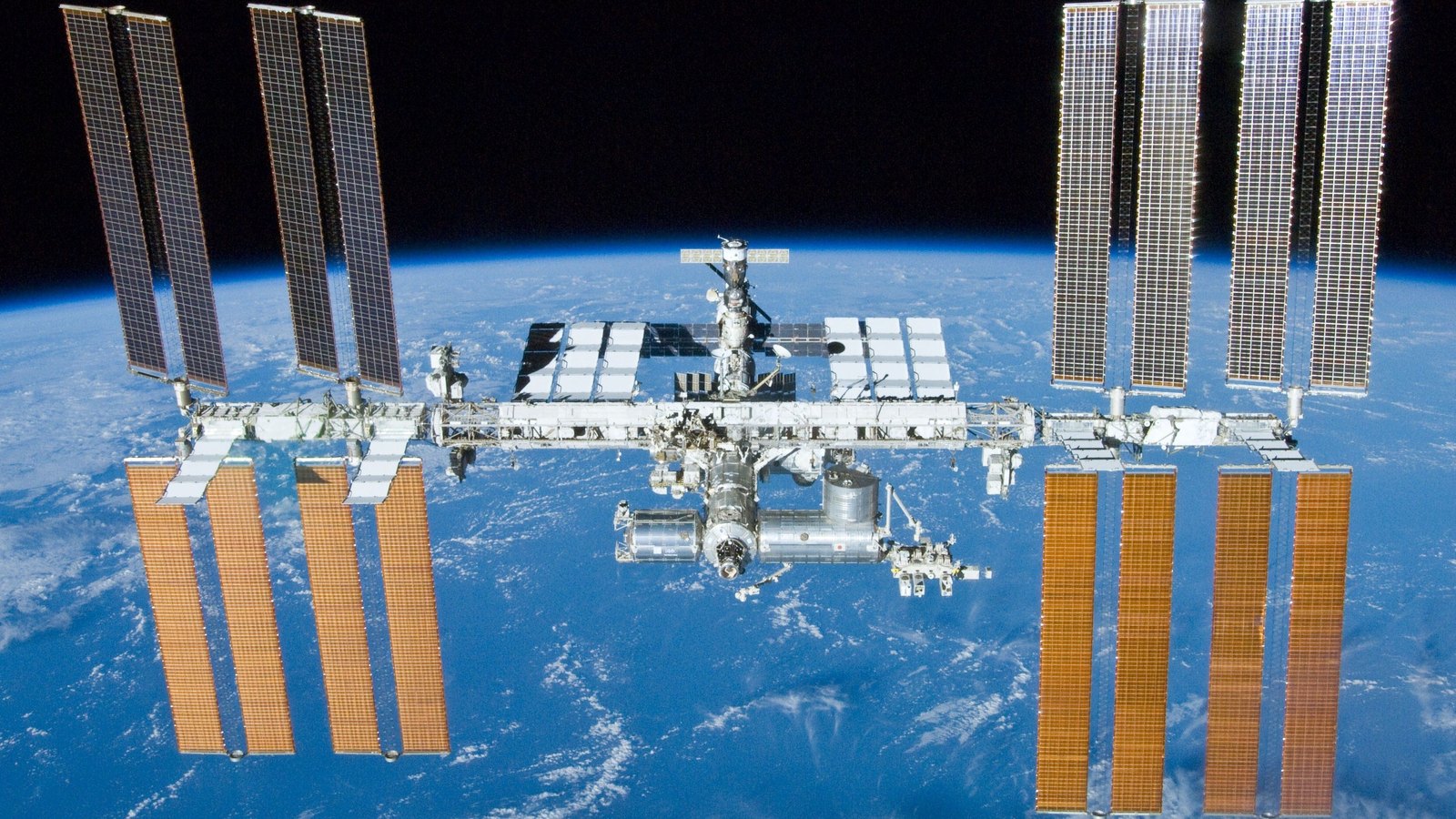
Images: the International Space Station photographed from the Space Shuttle Atlantis on 23 May 2010 (header image), NASA, STS-132 crew, Wikimedia Commons, public domain, cropped; Jonny Kim in the Columbus module, NASA Johnson Space Center, Wikimedia Commons, public domain, resized; Nick Hague in contact with Quebec, NASA Johnson Space Center, Wikimedia Commons, public domain, resized; Yagi antenna at the Goddard centre, NASA Goddard Space Flight Center, Wikimedia Commons, CC BY 2.0, resized; Institut Florimont pupils at 4U1ITU, ITU/F. Scotti, Wikimedia Commons, CC BY 2.0, resized.
© 2026 HB9V · Club Radioamateur Suisse All rights reserved. No reproduction, even partial, without the written permission of HB9V. Photos and trademarks mentioned remain the property of their respective owners.